Faceless Head Spa waterfall halo rinsing dark hair with a cobalt towel

Inside the Scalp Retreat: Steam, Waterfall Rinses and Ten Steps

Inside the Scalp Retreat: Steam, Waterfall Rinses and Ten Steps

The Precision Journal · Head Spa

The Scalp Retreat is designed as a sequence—not a quick shampoo. Here is how aroma, steam, three waterfall-halo rinses and finishing care fit into one 60-minute appointment.
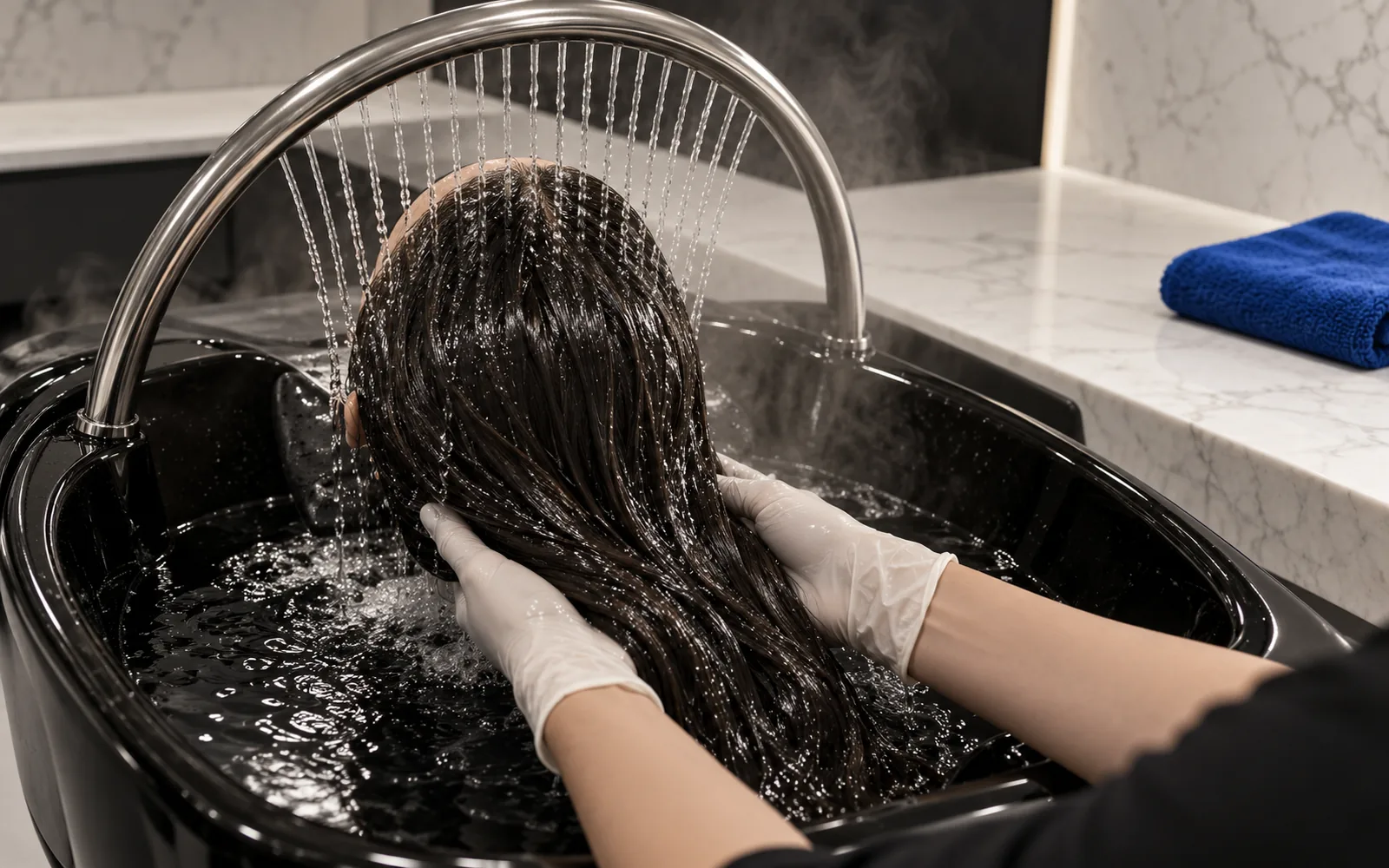
Faceless Head Spa waterfall halo rinsing dark hair with a cobalt towel
Original illustrative photograph of a waterfall-halo rinse. It does not show a LaserTouch MD guest or treatment result.

Why the order matters

A Head Spa feels unhurried because each step has a job. The early part sets the sensory tone and prepares the scalp. Cleansing and conditioning are separated by rinses so the ritual moves forward cleanly. The final steps return the focus to scalp and hair care before the blow-dry finish.

At LaserTouch MD, the current Scalp Retreat is a team-based cosmetic scalp, hair-care and relaxation service. It is not presented as a diagnosis or treatment for hair loss or a medical scalp condition. If you have an unexplained scalp concern, active irritation or open sores, contact the clinic before booking.

Three waterfall moments: the halo rinse appears after exfoliation, after deep cleansing and after the conditioning mask. It is a transition between stages, not a stand-alone treatment claim.

The ten-step Scalp Retreat

  1. Choose your aroma

    Select the scent direction that fits the visit, or ask for no added scent and share fragrance sensitivities.

  2. Steam and oil scalp massage

    Warm steam accompanies the service’s antioxidant-oil scalp-massage step.

  3. Scalp exfoliation salt scrub

    A salt scrub focuses on surface buildup as part of the cosmetic scalp-care sequence.

  4. Waterfall halo rinse

    The first halo rinse clears the exfoliation step before shampoo.

  5. Deep-cleansing shampoo

    Cleansing follows the scrub and first rinse rather than beginning the appointment.

  6. Waterfall halo rinse

    The second rinse removes shampoo before the conditioning stage.

  7. Conditioning mask with steam

    A deep-conditioning hair mask and steam shift the ritual from cleansing to conditioning.

  8. Waterfall halo rinse

    The third halo rinse completes the mask stage.

  9. Peptide serum scalp nutrients

    The team applies the service’s finishing scalp-serum step after the final rinse.

  10. Blow-dry finish

    The appointment closes with a blow-dry finish; discuss specific styling requests before the visit.

What to tell the team before you settle in

Your hair

Mention texture, extensions, protective styles, recent color and chemical services.

Your scalp

Share sensitivity, allergies, active irritation, open areas or unexplained concerns.

Your comfort

Discuss fragrance, heat, neck positioning and the bed’s gentle leg-compression feature.

The team can then discuss suitability, preparation and reasonable adaptations. That conversation also helps prevent a relaxing appointment from becoming a surprise—for example, if extensions change how the hair can be rinsed or dried.

Five useful booking questions

  • Should I wash my hair before the appointment?
  • Are my extensions, protective style or recent color service compatible?
  • Can I request an unscented experience?
  • What is included in the blow-dry finish?
  • Is the heated bed or gentle leg compression appropriate for my comfort needs?

The Scalp Retreat is currently $115 as a regular appointment. The Skin & Scalp Club offers either one Scalp Retreat Head Spa or one Diamond Hydrospa Facial for $99 per month, with the option to choose both for $198. Review membership terms, scheduling and cancellation before enrolling.

Book your Bentonville retreat

Explore the current Scalp Retreat Head Spa, then use the dedicated Head Spa category in online booking or call LaserTouch MD with your preparation questions.

Find a Head Spa appointment
Call 479-268-4573

Service details checked October 31, 2026:
LaserTouch MD Scalp Retreat Head Spa,
Skin & Scalp Club, and the current clinic Skin & Scalp Club brochure.

Faceless event-planning still life with invitation, clock, towel, skincare and cobalt ribbon

Dermaplaning Before a Special Event: Build in a Skin Buffer

Dermaplaning Before a Special Event: Build in a Skin Buffer

The Precision Journal · Event planning

A wedding, holiday party or photo session can make “when should I book?” feel urgent. The useful answer starts with your skin history—not a universal countdown.

Faceless event-planning still life with invitation, clock, towel, skincare and cobalt ribbon
Illustrative event-planning still life. It does not show a patient, treatment or result.

Why timing is personal

Dermaplaning works at the surface, removing fine facial hair and surface dead skin cells with a blade. LaserTouch MD offers it as a standalone visit or as part of a broader skin-care plan. That does not mean every complexion will look or feel the same immediately afterward.

Temporary redness or irritation can occur, and cuts, infection, scarring or pigment changes are possible. Active acne, infection or already-irritated skin may change whether the appointment should happen at all. A published systematic review also found the research supporting dermaplaning was limited and poorly documented, which is a good reason to keep expectations measured rather than promise an “instant glow.”

The best event-timing question:

“Based on my skin, recent treatments and products, how much buffer would you want between dermaplaning and my event?”

A four-step event plan

  1. Share the real date

    Tell the team whether the event includes professional makeup, outdoor time, travel or photographs. Also say whether this would be your first dermaplaning visit.

  2. Review what your skin has already been through

    Bring up recent peels, facials, laser treatments, microneedling, waxing, sun exposure, breakouts, cold sores and irritation. More exfoliation is not automatically better.

  3. Ask for your buffer

    If this is your first appointment or your skin is reactive, avoid relying on a last-minute slot. Ask whether at least a week—or more—is appropriate for you. That is a planning question, not a guarantee that everyone needs the same interval.

  4. Protect the recovery window

    Follow the clinic’s instructions for gentle cleansing, moisturizing, sun protection and restarting exfoliating products. Do not add a new peel, scrub or strong active simply because the event is close.

Standalone visit or combination treatment?

Standalone may make sense when

You want to see how your skin responds, your schedule is tight, or you are already using products or treatments that affect sensitivity.

Coordination matters when

You are considering a facial, peel, waxing or another procedure near the same date. Ask the team to choose the sequence and recovery space.

LaserTouch’s current dermaplaning and chemical-peel pages both advise asking before combining services. That keeps the decision focused on skin comfort and tolerance rather than squeezing the most treatments into one appointment.

Bring these questions

  • Is my skin calm enough for dermaplaning today?
  • Which products should I pause, and when can I restart them?
  • Should dermaplaning be separate from my facial or peel?
  • What temporary redness, sensitivity or texture changes should I expect?
  • When is makeup reasonable for my skin?
  • What symptoms should prompt a call to the clinic?

One common worry can be set aside: trimming fine hair at the surface does not change the follicle, so it does not make that hair grow back thicker. Dermaplaning is temporary surface hair removal, not a laser hair-removal program.

Plan your Bentonville appointment

Review LaserTouch MD’s current dermaplaning information, then book through the current Esthetics menu or call with your event date and questions.

Explore esthetics booking
Call 479-268-4573

Sources reviewed October 30, 2026:
LaserTouch MD dermaplaning;
LaserTouch MD chemical peels;
Cleveland Clinic dermaplaning overview; and
a systematic review of dermaplaning evidence (PMID: 21533984).
Illustrative consultation cards representing uneven tone, visible redness and skin texture

Tone, Redness or Texture? Choosing the Right Laser Consultation

Tone, Redness or Texture? Choosing the Right Laser Consultation

The Precision Journal · IPL & laser consultation

“Laser” is a category, not a complete treatment plan. A useful consultation starts by naming what you see—uneven tone, visible redness or texture—then matching that concern to the right technology, settings and recovery plan.

Illustrative consultation cards representing uneven tone, visible redness and skin texture
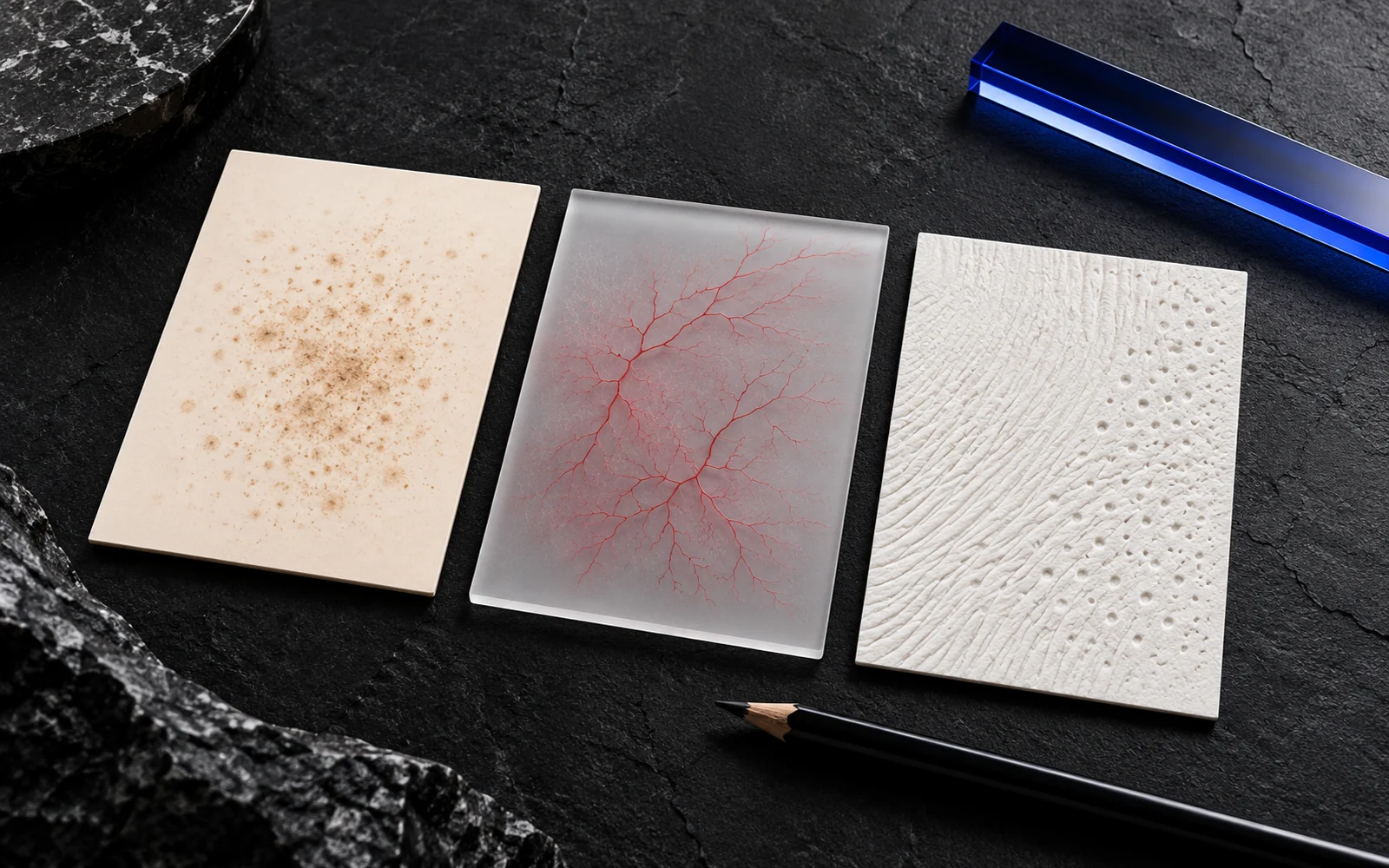
Illustrative tone, redness and texture still life. This is not a device, patient result or LaserTouch protocol.

Start with the concern, not a treatment name

LaserTouch MD currently lists IPL/BBL and laser skin treatments among its aesthetic services. Those names cover different tools and targets. Before choosing one, describe the change you want to discuss, where it appears, how long it has been present and whether it changes with sun, heat, exercise or skincare.

Tone

Bring up freckles, sun spots or areas of uneven brown pigment. Ask whether the spot first needs medical evaluation and whether your skin’s recent sun exposure or pigment history changes the plan.

Redness

Explain whether you see a broad flush, individual visible vessels or redness that comes with breakouts. These are not automatically the same target, even when they appear in one area.

Texture

Be specific about roughness, fine lines, scars or pores. Texture may lead to a discussion of resurfacing or microneedling rather than IPL, with a different recovery window and risk profile.

Why the exact handpiece matters

A multi-application platform can offer several distinct energy types. Rohrer Aesthetics’ current Spectrum materials, for example, describe separate IPL, Er:YAG, Nd:YAG, diode and other handpieces. Its formal indications distinguish IPL applications for certain vascular and benign pigmented lesions from Er:YAG applications involving superficial ablation and dermabrasion. The label also ties IPL filters and skin-type ranges to specific uses.

That distinction is the practical point: a platform name does not make every handpiece suitable for every concern. Ask which exact device and applicator are proposed for you, what that choice is intended to target, and whether the recommendation follows the device’s labeled use. LaserTouch’s current public service page does not identify the exact platform or handpiece for every laser service, so confirm those details during your visit.

A photo can help you describe a pattern, but it cannot replace an in-person assessment.

Changing, irregular, bleeding or otherwise concerning lesions should be evaluated medically rather than treated as a routine cosmetic pigment concern.

Bring this checklist to your consultation

  • Your priority: tone, redness or texture—and the one change that matters most.
  • Your skin history: tanning, recent sun exposure, pigment changes after irritation, scarring and cold sores.
  • Your current routine: prescriptions, supplements, photosensitizing medicines, retinoids, acids and recent procedures.
  • The proposed tool: exact device, handpiece or filter, intended target and why it fits your skin.
  • Comfort and protection: what the treatment feels like, what eye protection is used and how the area is prepared.
  • Recovery: expected redness or swelling, sun precautions, skincare changes and the symptoms that should prompt a call.
  • Risk and alternatives: possible burns, blisters, pigment change or scarring, plus reasonable options if light or laser is not the best match.
  • How progress is judged: photography, review timing and when another session would—or would not—make sense.

Set one outcome you can evaluate

A clear goal makes follow-up more useful. “I want fewer visible brown spots on my cheeks” or “I want to understand what is causing this redness” gives the clinician something concrete to assess. Results and recovery vary with the condition, device, settings, skin type and aftercare, so the consultation should define what improvement is realistic and how it will be measured.

Plan your Northwest Arkansas consultation

Review LaserTouch MD’s current laser treatment information, then bring your concern and questions to a personalized consultation in Bentonville.

Book a consultation
Call 479-268-4573

Sources reviewed October 29, 2026:
LaserTouch MD laser treatments;
Rohrer Aesthetics indications for use;
Rohrer Spectrum platform overview; and a
randomized split-face comparison of IPL and pulsed-dye laser for facial telangiectasias (PMID: 20205349).
Illustrative sealed single-use microneedling cartridge with gauze and three cobalt-accented series cards

Planning a Microneedling Series: Questions About PRP and VAMP

Precision Journal · Microneedling

Planning a Microneedling Series: Questions About PRP and VAMP

A useful series plan names the concern, the device, the interval and the review point—then treats every add-on as a separate decision with its own evidence and instructions.

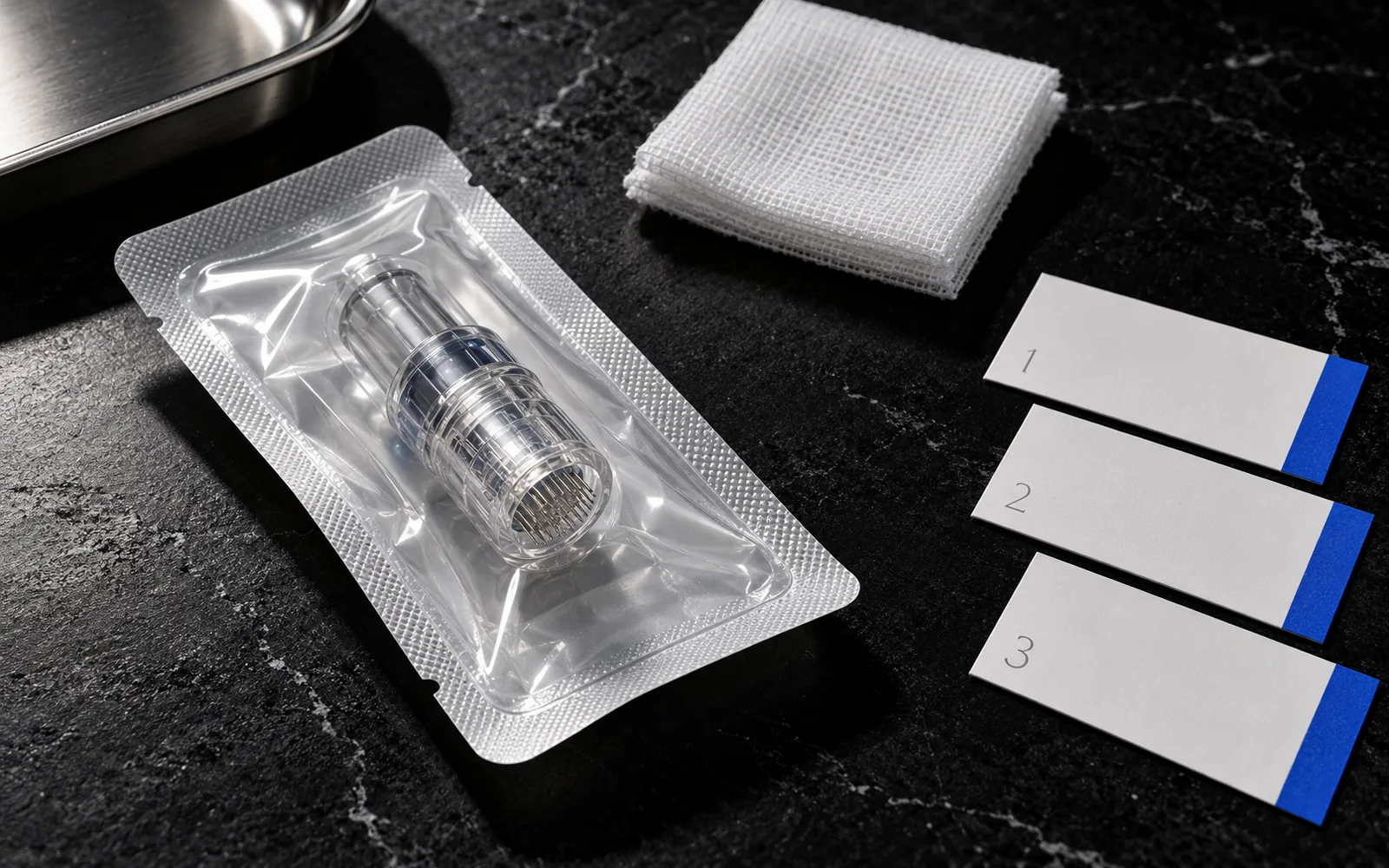
Illustrative sealed single-use microneedling cartridge with gauze and three cobalt-accented series cards
Illustrative sterile-tip still life. It is not LaserTouch MD’s device, a patient treatment or a depiction of the clinic’s protocol.

Build the series backward from the goal

Three visits should not mean three identical decisions.

LaserTouch MD currently offers regular microneedling and invites patients to discuss PRP and VAMP options. A series can make sense because skin response is assessed over time, but “three sessions” is not a universal prescription. The treatment area, needle depth, interval, recovery and decision to continue should come from an individual assessment.

01 · PLAN

Name one concern and record a realistic starting point.

02 · FIRST VISIT

Confirm the device, fresh cartridge, depth and aftercare.

03 · REVIEW

Separate expected redness from a settled response.

04 · NEXT STEP

Continue, adjust, pause or choose another option.

Add-ons are different materials

PRP and VAMP do not answer the same question.

PRP starts with your blood.

Platelet-rich plasma is prepared from a sample of the patient’s own blood. Research on acne scars suggests that adding PRP to microneedling may improve some outcomes compared with microneedling alone, but protocols and outcome measures vary. A 2021 meta-analysis included 14 controlled studies and 472 patients; it supports a useful conversation, not a promise for every concern or skin type.

Ask: How is the PRP prepared, how would it be used, and what evidence applies to my exact goal?

VAMP Advanced is a manufactured topical product.

Prollenium’s current product information describes VAMP Advanced as a topical, single-use formula containing PDRN, hyaluronic acid, vitamins, amino acids and minerals. It is not PRP, and the manufacturer says it must not be injected or used on cuts, burns, wounds or other compromised skin.

Ask: When would it be applied, what does the product labeling allow, and why is it being considered for me?

The timing question matters. Microneedling intentionally creates controlled punctures. VAMP labeling describes topical use and excludes compromised skin. That is why a clinician should explain the exact timing and application plan instead of treating “VAMP with microneedling” as a self-explanatory phrase.

A boundary worth knowing

Device clearance does not automatically cover the add-on.

The FDA has legally authorized specific microneedling devices for specific uses, including the appearance of facial acne scars, facial wrinkles and abdominal scars in adults 22 and older. Authorization is device- and indication-specific.

The FDA also states that microneedling devices are not approved for delivering cosmetics, topical medications, vitamin solutions, drugs or blood products such as PRP into the skin. That does not settle every provider discussion, but it does mean the provider should distinguish the microneedling procedure from the proposed product and explain what is supported, what is off label and what alternatives are available.

Common effects can include redness, tightness, itching, peeling, discomfort, bruising, bleeding and crusting. Less common risks include pigment changes, cold-sore reactivation and infection. A new single-use cartridge should be used for every patient and every session.

Bring this checklist

Seven questions for a clearer series plan.

  1. What exact concern are we trying to improve?
  2. Which device and sterile cartridge will be used?
  3. How will depth and interval be chosen for my skin?
  4. What will we review before scheduling the next visit?
  5. If PRP is proposed, how is it prepared and used?
  6. If VAMP is proposed, when is it applied and what do its instructions permit?
  7. Which symptoms should prompt a call or urgent care?

Share your medications and supplements, allergies, cold-sore history, tendency toward pigment changes, recent procedures, active skin conditions and prior reactions. Do not stop prescribed medication on your own. Follow the written preparation and aftercare plan for the exact treatment you receive.

Bentonville · Rogers · Northwest Arkansas

Start with the plan, then choose the add-on.

Explore LaserTouch MD’s current microneedling options, then bring your skin goal, treatment history and questions to a Bentonville consultation.

Clinical preparation tray with sterile gauze, a disposable tourniquet, two empty collection tubes and a cobalt appointment card

PRF BioFiller Questions: From Blood Draw to Follow-Up

Precision Journal · PRF BioFiller

PRF BioFiller Questions: From Blood Draw to Follow-Up

A useful consultation should explain the exact preparation, the goal it is meant to address and how you will judge the settled result—not just call it “natural filler.”

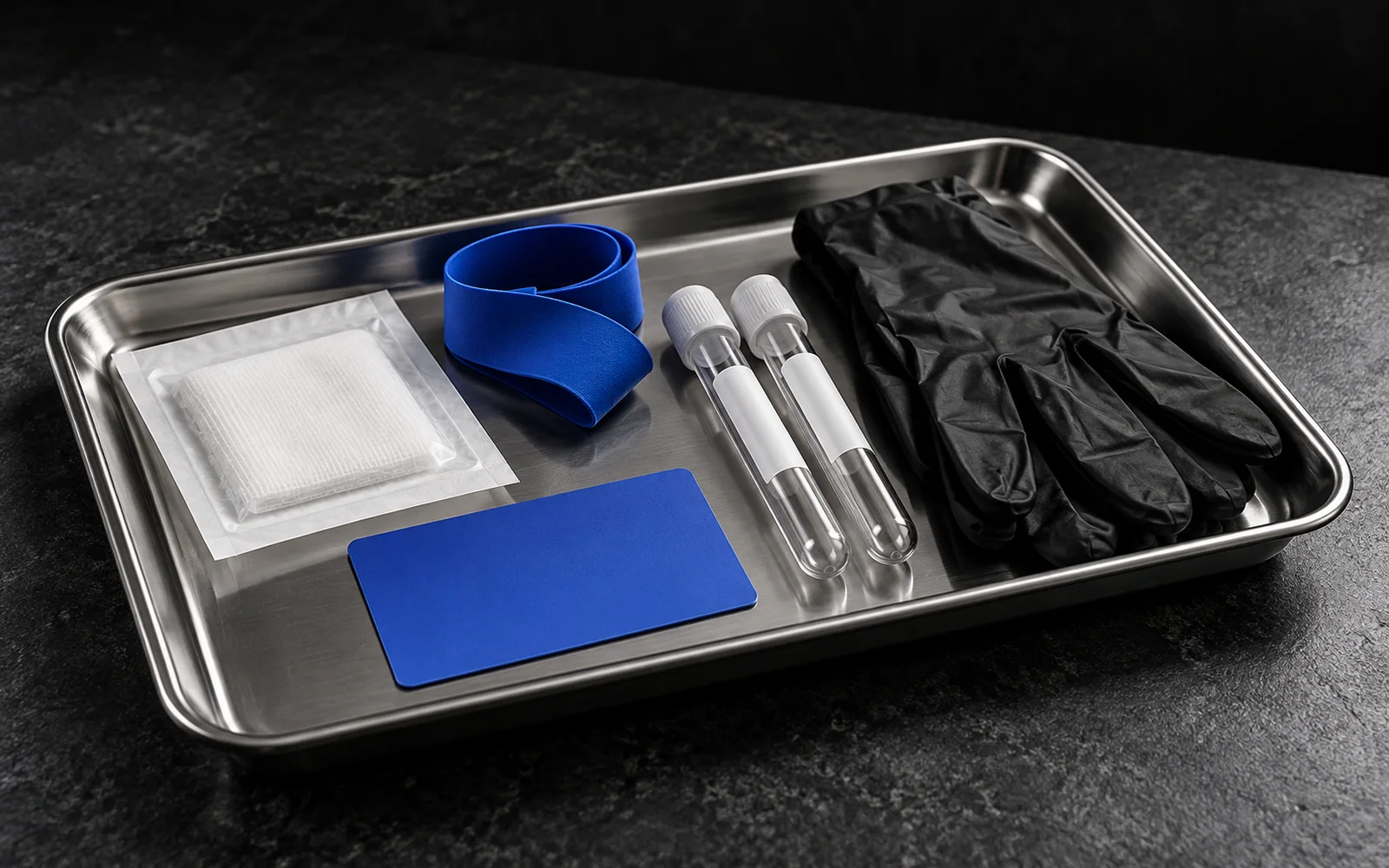
Clinical preparation tray with sterile gauze, a disposable tourniquet, two empty collection tubes and a cobalt appointment card
Illustrative preparation still life. It contains no blood, patient specimen or treatment product and does not show a clinic protocol.

PRF stands for platelet-rich fibrin, a blood-derived preparation discussed within regenerative aesthetics. “BioFiller” can refer to a processed plasma-based gel, while liquid injectable PRF is a different material. Processing methods vary, so findings about one preparation should not automatically be applied to every product called PRF or BioFiller.

That distinction matters because a consultation is not simply a choice between “natural” and “synthetic.” It is a decision about a specific concern, an exact preparation, an injection plan and a realistic review point.

BeforeDefine the concernSeparate hollowing, pigmentation, puffiness, fine texture and facial balance. One treatment will not address every cause.
DuringName the materialAsk whether the plan uses liquid PRF, a processed plasma gel or another blood-derived preparation—and how it is prepared.
AfterSet the review pointKnow what swelling and bruising may look like, when the appearance should be assessed and what would prompt an earlier call.

Preparation begins before the blood draw

Bring a current list of medications and supplements, previous injectable treatments, allergies, bleeding or clotting concerns, recent illness and active skin problems. Do not stop a prescribed medication on your own. Ask the treating clinician whether anything in your history changes the plan or recovery expectations.

If you proceed, the appointment includes a blood draw and preparation of the selected material before treatment. The exact equipment, processing steps and appointment length can differ. Ask which system and preparation are being used, who will perform each part of the visit and how sterile handling is maintained.

Purpose should be specific enough to evaluate

“Rejuvenation” is too broad to measure. A clearer goal might be improving the appearance of fine texture, discussing mild hollowing or evaluating facial balance. Under-eye concerns deserve special care because discoloration, puffiness, laxity and volume loss are different problems. A blood-derived option that fits one may not fit another.

PRF BioFiller is also not interchangeable with platelet-rich plasma or hyaluronic acid filler. The preparation, intended use, evidence, expected degree of change and risk profile should guide the decision. Ask what this option may reasonably do, what it is unlikely to change and which alternatives belong in the comparison.

How to read the evidence

A 2020 prospective study followed 11 healthy women who received three monthly injections of injectable PRF in several facial areas. At three months, researchers reported improvements in measured spots and pores and in several satisfaction scores; other skin measures showed numerical change. The study had no control group and used a specific liquid PRF process. It is useful early evidence, but it does not prove a predictable result, long-term durability or superiority for every BioFiller preparation.

Recovery and risk belong in the same plan

Bruising, swelling, tenderness and infection are possible. Early fullness may partly reflect swelling, so it should not be mistaken for the settled result. Ask how to care for the area, which activities or skincare to pause, and when to contact the clinic.

Blood-derived does not mean risk-free. Serious vascular complications, including irreversible vision loss, have been reported after cosmetic facial platelet-rich plasma injections. That evidence comes from PRP case reports rather than proof that every PRF preparation has the same risk, but it reinforces why facial injections require careful anatomy, sterile technique, informed consent and an emergency plan.

Seek emergency care for sudden vision changes, severe unusual pain, weakness, trouble speaking or other stroke-like symptoms during or after a facial injection.
Five questions to bring:

  • What exact preparation are you proposing?
  • Which concern is it intended to address—and what will it not change?
  • What evidence applies to this preparation and treatment area?
  • What recovery effects and urgent warning signs should I know?
  • When will we assess the settled result before considering anything more?

Start with the exact question.

LaserTouch MD offers PRF BioFiller consultations in Bentonville for clients from Rogers and across Northwest Arkansas. Choose the current Cosmetic Injection booking category and note that you want to discuss PRF BioFiller, or call with scheduling questions.

Book a BioFiller consultationCall 479-268-4573

Sources (accessed October 27, 2026):
LaserTouch MD PRF BioFiller service guide
Hassan, Quinlan & Ghanem, prospective i-PRF study (2020)
Karam et al., visual loss after facial PRP injection (2020)
Abstract ivory, charcoal and gray clay forms arranged with a cobalt measuring line to represent shape and facial balance

Shape, Balance and Realistic Goals: A Better Filler Conversation

Precision Journal · Dermal fillers

Shape, Balance and Realistic Goals: A Better Filler Conversation

A useful filler consultation starts with the change you want to understand, the features you want to preserve and how much difference would still feel like you.

Abstract ivory, charcoal and gray clay forms arranged with a cobalt measuring line to represent shape and facial balance
Abstract editorial still life. It does not depict anatomy, a patient result or a treatment simulation.

“Natural” is not a universal amount, product or shape. It is a personal description that needs translation. One person may mean sharper definition. Another may mean restoring a small change they have noticed over time. Someone else may decide that preserving movement and familiar proportions matters more than adding volume.

That is why a consultation should begin with your face as a whole. LaserTouch MD’s current dermal-filler guidance asks patients to discuss facial proportions, comfort with change and the specific feature that brings them in—then compare options before deciding whether treatment fits.

Lens 1 · ShapeName the detailIs your question about definition, contour, symmetry, a shadow or a change in volume?
Lens 2 · BalanceZoom outHow does that feature relate to the rest of your face at rest, in expression and in photographs?
Lens 3 · RestraintSet a stopping pointWhat is the smallest meaningful change, and what would feel like too much?

Start with an observation, not a syringe count

Bring one or two clear observations: “I notice less definition here,” “this side photographs differently,” or “I want to understand why this area looks heavier.” Also name what you like and want left alone. That gives the injector a more useful starting point than arriving with another person’s photo or a fixed number of syringes.

Photos can still help explain a preference, especially pictures of yourself from different years and angles. They are communication tools, not a promise that one face can be copied onto another. Anatomy, tissue quality and the approved use of the proposed product all matter.

Whole-face balance can change the answer

Focusing on one close-up can hide the relationship between features. A consultation may compare front, profile and three-quarter views and look at the face both still and moving. The answer may be filler, a different service, a staged plan or no treatment at all. More treatment is not automatically a better plan.

The FDA approves specific dermal fillers for specific uses in adults age 22 and older. Approved areas and expected duration vary by product. Ask for the exact product name, the intended treatment area and the patient labeling before you decide. Avoid assuming every filler is suitable for every location.

Define what “enough” means before treatment

A realistic plan includes a review point. Swelling and bruising can temporarily change how an area looks, so the first hours or days are not always the right moment to judge balance. Ask when the proposed product is normally reassessed, what changes are expected while it settles and what would prompt an earlier call.

Four questions worth bringing:

  • What exact change are we trying to make?
  • Which product and approved use are being proposed, and why?
  • What is a conservative starting point for my anatomy and preference?
  • When will we review the result before considering anything more?

Keep safety in the same conversation

Common reactions include swelling, bruising, redness, pain and tenderness. Other problems can include infection, nodules, allergic reactions and delayed inflammation. The most concerning risk is unintended injection into a blood vessel, which can cause tissue death, vision problems including blindness, or stroke. These complications are uncommon, but they can be serious and permanent.

Seek immediate medical attention for unusual or severe pain, vision changes, stroke-like symptoms, or skin near the injection site turning white, gray or blue during or shortly after filler treatment.

Tell the injector about previous fillers, medications, supplements, allergies, bleeding problems, pregnancy or breastfeeding, recent illness, dental work and any active rash or infection. Do not stop prescribed medication on your own; ask for individual guidance.

Bring the goal. Build the plan together.

LaserTouch MD offers dermal-filler consultations in Bentonville for clients from Rogers and across Northwest Arkansas. Use the current Cosmetic Injection booking category or call the clinic with scheduling questions.

Book a Cosmetic Injection consultationCall 479-268-4573

Sources (accessed October 26, 2026):
LaserTouch MD dermal-filler service guide — lasertouchmd.com
FDA Dermal Fillers (Soft Tissue Fillers) — fda.gov
FDA Dermal Filler Do’s and Don’ts — fda.gov
Illustrative four-step hormone-care follow-up timeline with starting point, early check-in, trend review and continuing-plan markers

How Follow-Up Shapes a Hormone-Care Plan

Precision Journal · Hormone care

How Follow-Up Shapes a Hormone-Care Plan

A prescription is one point in time. Follow-up is where symptoms, tolerance, measurements and the exact product come together to guide what happens next.

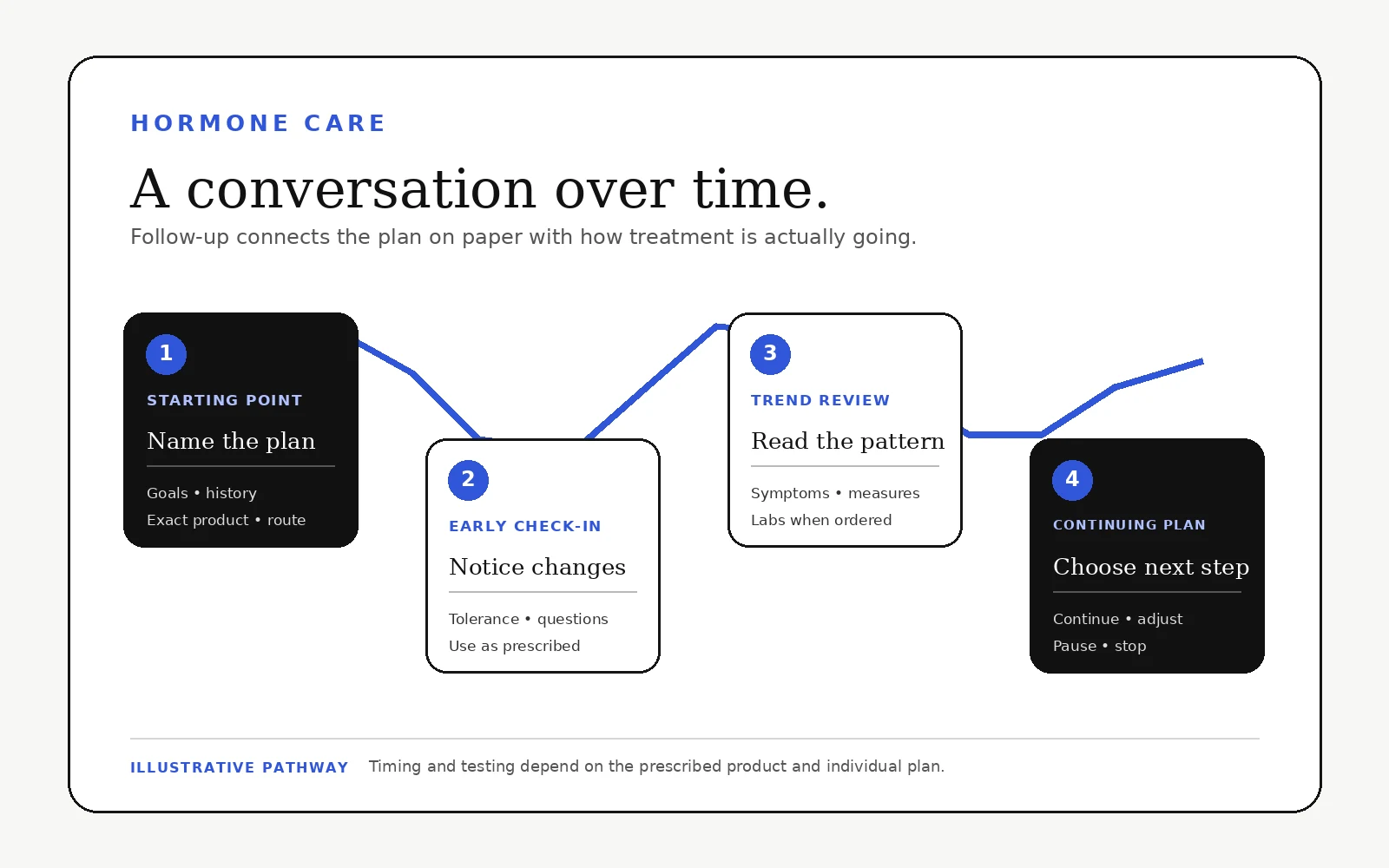
Illustrative four-step hormone-care follow-up timeline with starting point, early check-in, trend review and continuing-plan markers
An illustrative pathway. The timing and tests for HRT or TRT depend on the prescribed product and the individual plan.

Hormone care is rarely a “set it and forget it” decision. The useful question after treatment begins is not simply whether you feel different. It is whether the plan is meeting its original goal, whether any changes are safe and tolerable, and whether the evidence supports continuing it. That takes a series of conversations rather than one isolated appointment.

1 · Starting pointName the plan
Record the goal, relevant history, exact product and route.
2 · Early check-inNotice changes
Discuss tolerance, questions and how the medicine is being used.
3 · Trend reviewRead the pattern
Compare symptoms, measurements and any ordered laboratory work.
4 · Continuing planChoose the next step
Continue, adjust, pause or stop with the prescribing clinician.

1. Return to the reason treatment started

A useful follow-up begins with the goal documented at the first visit. For testosterone therapy, that means confirming the clinical picture included symptoms and consistently low testosterone levels—not treating a single number by itself. For menopausal hormone therapy, the goal may involve hot flashes, sleep or genitourinary symptoms, but the product, route and personal history still shape the discussion.

Bring the exact name, strength and route of every hormone product, along with medicines and supplements. Men should also keep fertility goals in the conversation. Women should report their bleeding pattern and whether they have a uterus, because those details can change the plan.

2. Describe what has changed, including what has not

Follow-up is the place to describe benefits, unwanted effects and practical problems without editing the story. When did a change begin? Is it steady or occasional? Were there missed doses, application difficulties or a change in another medicine? Those details help separate a true treatment response from normal day-to-day variation.

A lack of benefit is useful information too. It may lead to more evaluation, a revised goal or a decision that the treatment is not the right fit. Change a dose or schedule only with the prescriber; self-adjustment can make the next set of symptoms or test results harder to interpret.

3. Match monitoring to the exact product

There is no single follow-up checklist for every form of HRT or TRT. Testosterone monitoring may include symptoms, blood pressure, testosterone concentration, a blood count or hematocrit, fertility considerations, and prostate or urinary symptoms when appropriate. Menopausal hormone therapy follow-up may include symptom response, bleeding, adverse effects, blood pressure and recommended preventive screening. Systemic and local products, oral and transdermal routes, and regimens with or without a progestogen are not interchangeable.

Why the label matters: FDA testosterone and menopausal hormone-therapy labeling has changed in recent years. The current label for the exact prescribed product is a better guide than a generic online checklist for an entire category.

4. Make the next decision explicit

End the visit with a clear next step: continue the plan, adjust it, pause it, stop it or investigate something else. Ask what should be tracked at home, which tests are needed, and when the next review should occur. The answer should reflect the product and your health history rather than a universal calendar.

Contact the prescribing team promptly about unexpected vaginal bleeding, a new breast symptom, or worsening urinary or prostate symptoms. Seek emergency care for chest pain, sudden shortness of breath, one-sided leg swelling, or stroke-like symptoms such as facial droop, arm weakness or trouble speaking.

Plan your next conversation

LaserTouch MD offers women’s HRT and men’s TRT consultations for Bentonville, Rogers and surrounding Northwest Arkansas communities. Bring your goals, medication list and questions so the visit can focus on your individual plan.

Request an appointmentCall 479-268-4573

Sources (accessed October 25, 2026):
LaserTouch MD hormone services — lasertouchmd.com
FDA Testosterone Information — fda.gov/drugs/testosterone-information
FDA menopausal hormone-therapy labeling update — fda.gov
Endocrine Society statement on testosterone diagnosis and monitoring — endocrine.org
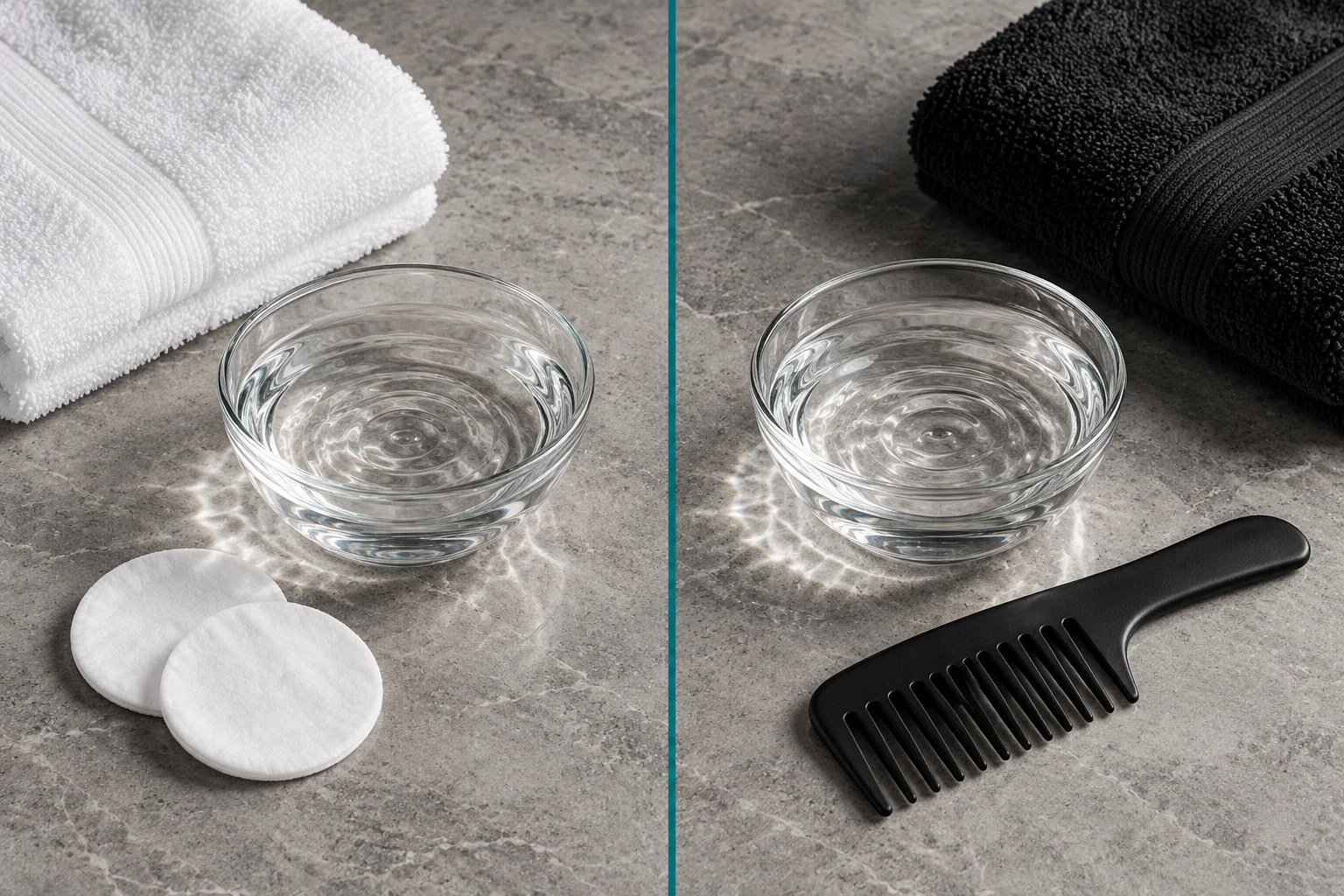
Split editorial still life with white and charcoal spa towels, two clear water bowls and a single deep-teal line, representing monthly facial or Head Spa choices

Skin & Scalp Club: One Membership, Two Ways to Make Time for Yourself

Skin & Scalp Club · Bentonville

One Membership, Two Ways to Make Time for Yourself

Your monthly choice can follow what you need now: focused facial care or a 60-minute scalp-and-hair retreat.

Split editorial still life with white and charcoal spa towels, two clear water bowls and a single deep-teal line, representing monthly facial or Head Spa choices

The useful part of a monthly ritual is not making the same choice forever. LaserTouch MD’s Skin & Scalp Club includes one monthly service for $99: either a Diamond Hydrospa Facial or a Scalp Retreat Head Spa. You can change your selection from one month to the next as your priorities and schedule change.

Choice one · skin

Diamond Hydrospa Facial

Choose this route when surface texture, congestion or hydration is the priority you want to discuss. The current service includes professional cleansing, diamond-tip surface exfoliation, pore-focused care when appropriate, hydrating skincare and finishing care.

$99 with the club · regular price $125

See the current Hydrospa options

Choice two · scalp & hair

Scalp Retreat Head Spa

Choose this route when you want dedicated scalp and hair care with quiet time built in. The 60-minute, team-based ten-step ritual may include steam, scalp massage and exfoliation, waterfall-halo rinses, shampoo, conditioning hair mask, scalp nutrients and a blow-dry finish.

$99 with the club · regular price $115

Explore the Scalp Retreat

Let the month make the decision

  • Your skin feels like the priority: choose the Diamond Hydrospa Facial and share any sensitivity, active irritation, recent peel, laser treatment or microneedling before the appointment.
  • Your scalp, hair or need for a longer reset leads: choose the Scalp Retreat. Mention extensions, recent color, scalp conditions and fragrance sensitivities when you book.
  • Both sound useful: club members may choose one of each for $198 total, with each service priced at $99.
  • Next month is different: switch your selection. The club is designed to keep that choice open.

Five questions to settle before you enroll

  1. Which exact service is included in the $99 monthly choice?
  2. How and when do I switch between the facial and Head Spa?
  3. What are the billing, scheduling and cancellation terms?
  4. Which optional enhancements cost extra, and what is the current member price?
  5. Is either service a poor fit for my recent treatments, skin or scalp condition, allergies, extensions or hair-care routine?

A membership should make self-care easier to plan, not harder to understand. Asking these questions keeps the monthly choice connected to your real priorities and gives the team the information needed to guide scheduling and suitability.

Choose this month’s ritual

Explore the Skin & Scalp Club, then contact LaserTouch MD to review current terms and choose the right appointment for you. LaserTouch MD serves Bentonville, Rogers and nearby Northwest Arkansas communities.

View the club
Book online

Questions? Call 479-268-4573.

Faceless injectable consultation still life with an open checklist notebook, black pen, face-down mirror, white towel and deep-teal appointment card

What to Discuss Before Your Next Injectable Appointment

LaserTouch MD · The Precision Journal · Daxxify & Injectables

What to Discuss Before Your Next Injectable Appointment

A six-question consultation guide for comparing neuromodulator options, setting realistic goals and making the safety plan specific.

Faceless injectable consultation still life with an open checklist notebook, black pen, face-down mirror, white towel and deep-teal appointment card
A useful injectable visit starts with your goals, history and questions—not a brand name or a unit count.

A neuromodulator consultation is a decision-making visit. The goal is not simply to choose a familiar brand; it is to connect the expression you want to soften, your facial movement, your medical history and your tolerance for tradeoffs to an appropriate plan.

LaserTouch MD currently identifies Daxxify among the injectable options available in Bentonville. Availability and suitability can change, so confirm the product at booking and again before treatment. These six questions can make that conversation clearer for patients coming from Bentonville, Rogers and across Northwest Arkansas.

Question 01

What are we treating?

Describe the movement or line that bothers you and when you notice it—while frowning, at rest, in photos or throughout the day. Daxxify’s FDA-approved cosmetic indication is the temporary improvement of moderate-to-severe glabellar lines, the vertical “frown lines” between the eyebrows, in adults. If a proposed area is outside that indication, ask whether the use is off-label, why it is being considered and what evidence and experience support the recommendation.

Question 02

Which product fits the goal—and why?

Ask which neuromodulator is being recommended, what differences matter for you and how your prior response influences the choice. Daxxify’s prescribing information states that its potency units are specific to Daxxify and are not interchangeable with or convertible to units of other botulinum toxin products. A “per-unit” comparison across brands can therefore be misleading without the complete treatment plan.

Question 03

What belongs in my health history?

Bring the product name, date, treatment area, response and any side effects from prior botulinum toxin treatments. Share allergies, an infection or irritation near a proposed injection site, facial surgery or anatomy changes, neuromuscular conditions, swallowing or breathing problems, and pregnancy or breastfeeding status. Also list prescriptions, over-the-counter medicines and supplements. The Daxxify label specifically calls for caution with aminoglycoside antibiotics, anticholinergic medicines, other agents that interfere with neuromuscular transmission and muscle relaxants. Do not stop a prescribed medicine unless its prescriber tells you to.

Question 04

What result is realistic?

Ask what improvement is reasonable for your pattern of movement, what may remain visible at rest and how asymmetry will be considered. Results are temporary and vary. Agree on the priority—softer movement, a more rested look or preservation of a particular expression—and ask when consistent photographs and follow-up will be useful. More product is not automatically a better result.

Question 05

Which side effects and warning signs should I know?

In clinical studies for glabellar lines, the most common adverse reactions reported with Daxxify were headache (6%), eyelid drooping (2%) and facial muscle weakness (1%). Ask how the clinic reduces avoidable risk, which changes should prompt a routine call and which need urgent attention. The prescribing information also lists contraindications for known hypersensitivity to botulinum toxin preparations or Daxxify components and for infection at the proposed injection sites.

Question 06

What is the follow-up plan?

Before leaving, know the written aftercare instructions, the clinic contact route, when the expected response can be assessed and when another treatment should or should not be considered. Daxxify labeling says it should be administered no more frequently than every three months for any indication. Do not “top up” with a different product elsewhere before the response has been evaluated and the treating professionals know your full history.

Your appointment note

  • The exact product and treatment area being proposed
  • Your last neuromodulator product, date, response and side effects
  • Your medicines, supplements, allergies and relevant health conditions
  • The goal you want to preserve as well as the line you want to soften
  • The expected follow-up date and the clinic’s after-hours contact plan

Bring the questions before choosing the product.

Review LaserTouch MD’s current neuromodulator information, then request a cosmetic-injection appointment or call 479-268-4573. Ask whether Daxxify is currently available and appropriate for your goal.

Sources: LaserTouch MD’s current injectable availability page; Daxxify healthcare-professional safety information; and Daxxify full Prescribing Information and Medication Guide, revised November 2023. Sources checked October 23, 2026. General education, not individual medical advice. Product availability, suitability, risks and results vary. No clinician review is claimed.

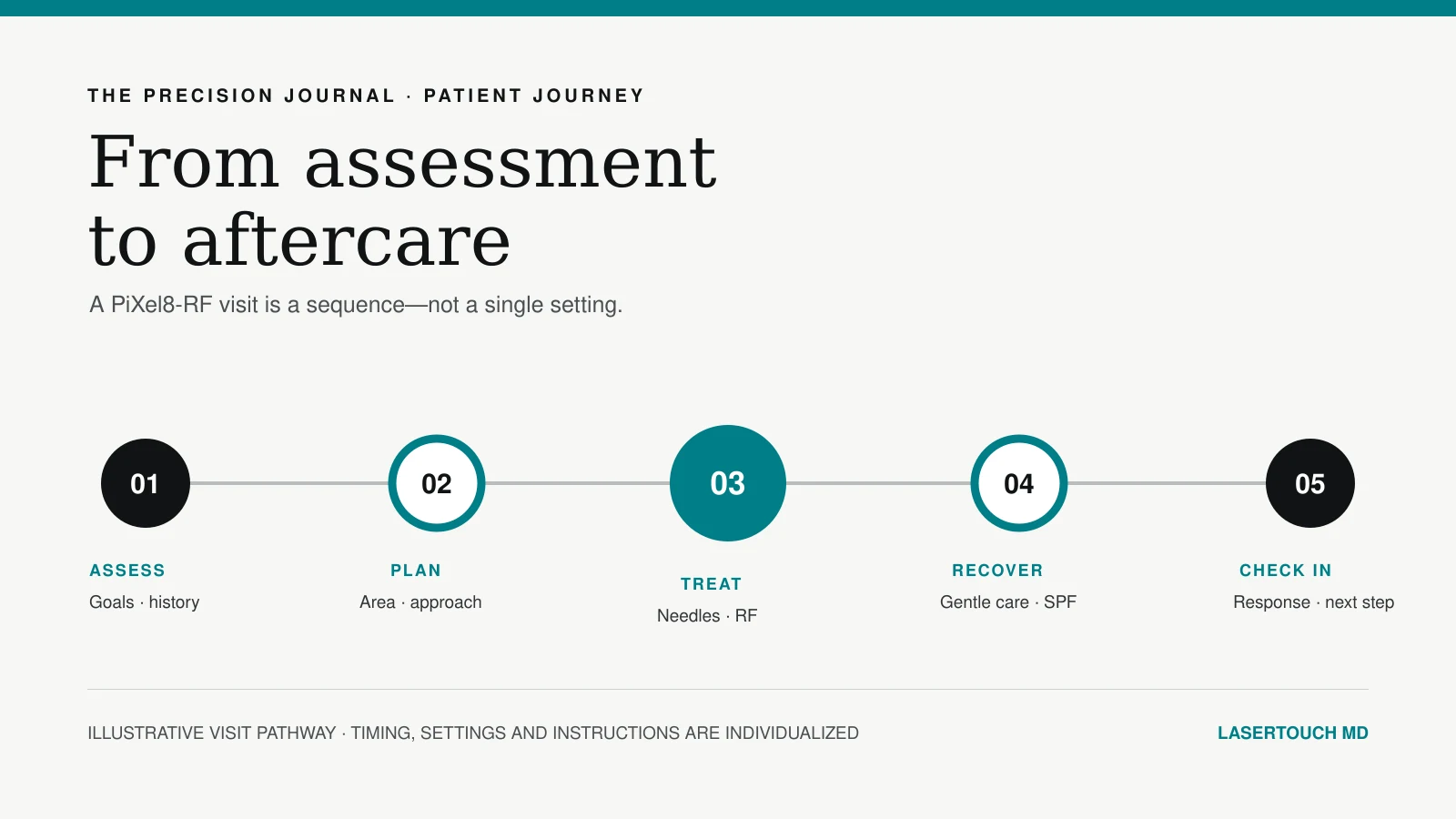
Illustrative PiXel8-RF appointment pathway with five stages: assess, plan, treat, recover and check in

PiXel8-RF: From Assessment to Aftercare

LaserTouch MD · The Precision Journal · PiXel8-RF

PiXel8-RF: From Assessment to Aftercare

A practical treatment-day pathway—and the questions that belong at each step.

Illustrative PiXel8-RF appointment pathway with five stages: assess, plan, treat, recover and check in
Illustrative visit pathway, not a device photograph or patient result. Timing, settings and aftercare are individualized.

A PiXel8-RF appointment is not simply a machine being switched on. The useful part begins before treatment, with an assessment that connects your concern, medical history and recovery plans to a specific approach. It continues afterward, when your skin response and written instructions matter more than a generic online schedule.

LaserTouch MD currently offers PiXel8-RF consultations for the face and neck in Bentonville. Because similar device names can refer to different platforms, this guide does not assume that online specifications apply to the clinic’s exact machine generation. Ask the team to identify the device and treatment tip during your visit.

01

Assessment: define the concern

Bring one or two priorities in your own words: texture, fine lines or the appearance of laxity, for example. Share prior procedures, medications and supplements, implanted devices, allergies, active skin problems, cold-sore history, pigment changes and any unusual scarring or healing. Do not stop a prescribed medication unless the prescribing clinician tells you to do so. A consultation can lead to treatment, another option—or waiting.

02

Planning: connect the settings to you

RF microneedling uses small needle-like electrodes to enter the skin and deliver radiofrequency energy below the surface. Depth, energy, treatment area and tip configuration are professional decisions, not a patient menu. Ask why the proposed approach fits your concern, how provider training relates to the device, which comfort measures may be used and what preparation applies to your plan.

03

Treatment: know what is happening

The FDA describes RF energy as producing localized heat in tissue around microneedle tips. Sensation can vary with the area and settings; a provider should explain what you may feel and what would be unexpected. Ask to see how the treatment tip is prepared and which infection-control steps are used. The manufacturer’s current indications page describes PiXel8-RF for dermatologic and general surgical procedures involving electrocoagulation and hemostasis; that wording is not a promise of a particular cosmetic result.

04

Recovery: follow your instructions, not a trend

Redness, swelling, tenderness and sensitivity can occur, but intensity and duration vary. Follow the clinic’s specific directions for cleansing, skincare, sun protection, exercise, heat exposure and makeup. Do not add a serum, topical medication, blood product or “healing” treatment simply because it appears in a social post; ask whether it belongs in your plan and when it is appropriate to restart your usual products.

05

Check-in: judge response over time

Immediate redness is not a final result, and an aggressive setting does not guarantee a better outcome. Ask when progress will be assessed, whether consistent photographs will be used and what would change the next step. If you are considering other procedures, let the team recommend order and spacing rather than stacking treatments on still-recovering skin.

Five questions worth saving

  • Which exact device, handpiece and treatment tip will be used?
  • How do my health and skin history affect the plan?
  • What reactions are expected, and what would be concerning?
  • What are my written aftercare instructions and contact route?
  • When will we evaluate response before considering another session?

Start with an informed consultation.

Review LaserTouch MD’s current PiXel8-RF service information, then book a PiXel8 consultation or call 479-268-4573. The Bentonville team welcomes questions from Rogers and nearby Northwest Arkansas communities.

Sources: Rohrer Aesthetics PiXel8-RF product information; Rohrer indications for use; U.S. FDA RF microneedling safety communication, issued October 15, 2025; and LaserTouch MD’s current PiXel8-RF service page. Sources checked October 22, 2026. General education, not individual medical advice. Suitability, risks, recovery and results vary. No clinician review is claimed.