
PiXel8-RF: From Assessment to Aftercare
LaserTouch MD · The Precision Journal · PiXel8-RF
PiXel8-RF: From Assessment to Aftercare
A practical treatment-day pathway—and the questions that belong at each step.
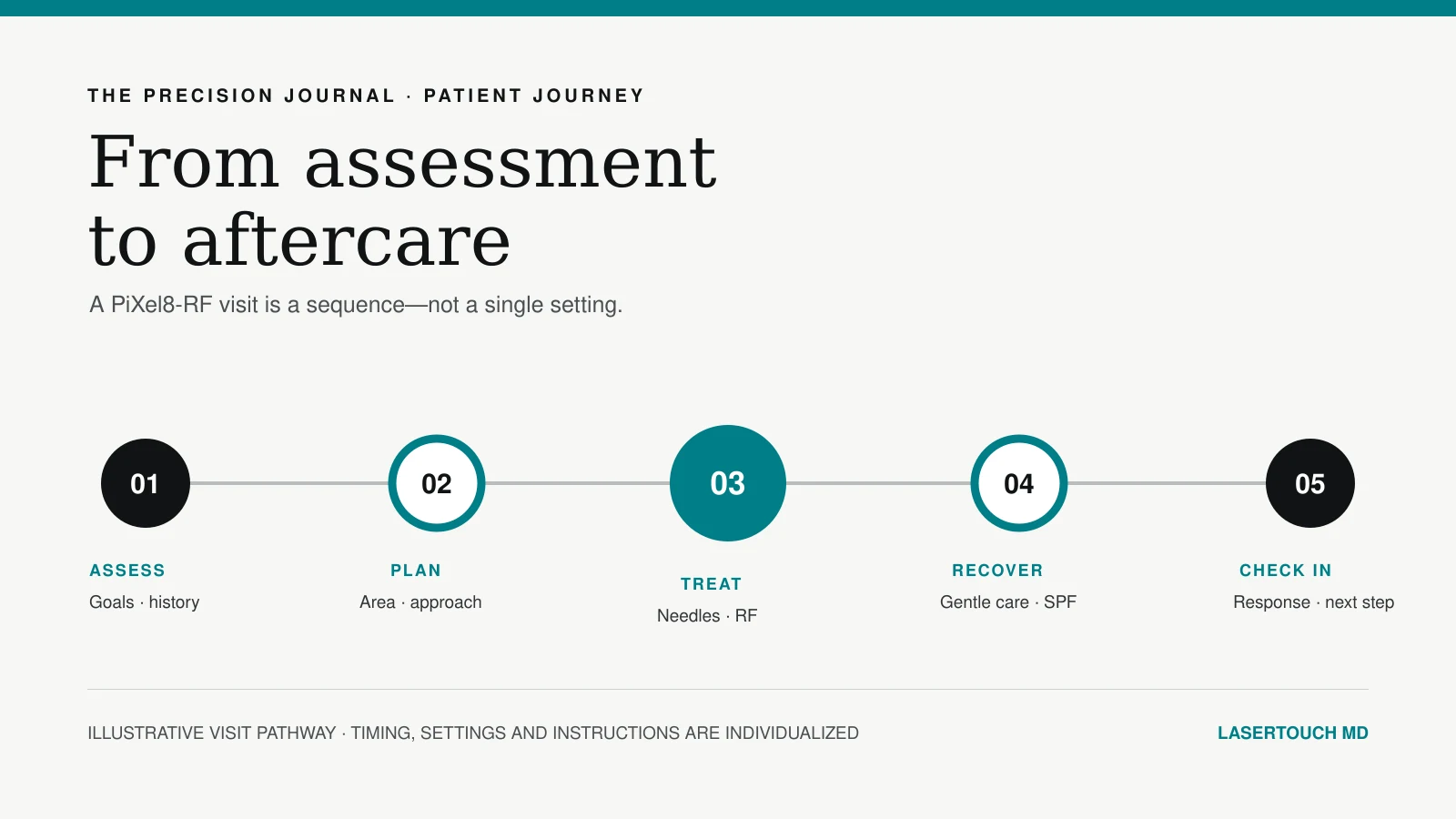
A PiXel8-RF appointment is not simply a machine being switched on. The useful part begins before treatment, with an assessment that connects your concern, medical history and recovery plans to a specific approach. It continues afterward, when your skin response and written instructions matter more than a generic online schedule.
LaserTouch MD currently offers PiXel8-RF consultations for the face and neck in Bentonville. Because similar device names can refer to different platforms, this guide does not assume that online specifications apply to the clinic’s exact machine generation. Ask the team to identify the device and treatment tip during your visit.
Assessment: define the concern
Bring one or two priorities in your own words: texture, fine lines or the appearance of laxity, for example. Share prior procedures, medications and supplements, implanted devices, allergies, active skin problems, cold-sore history, pigment changes and any unusual scarring or healing. Do not stop a prescribed medication unless the prescribing clinician tells you to do so. A consultation can lead to treatment, another option—or waiting.
Planning: connect the settings to you
RF microneedling uses small needle-like electrodes to enter the skin and deliver radiofrequency energy below the surface. Depth, energy, treatment area and tip configuration are professional decisions, not a patient menu. Ask why the proposed approach fits your concern, how provider training relates to the device, which comfort measures may be used and what preparation applies to your plan.
Treatment: know what is happening
The FDA describes RF energy as producing localized heat in tissue around microneedle tips. Sensation can vary with the area and settings; a provider should explain what you may feel and what would be unexpected. Ask to see how the treatment tip is prepared and which infection-control steps are used. The manufacturer’s current indications page describes PiXel8-RF for dermatologic and general surgical procedures involving electrocoagulation and hemostasis; that wording is not a promise of a particular cosmetic result.
Recovery: follow your instructions, not a trend
Redness, swelling, tenderness and sensitivity can occur, but intensity and duration vary. Follow the clinic’s specific directions for cleansing, skincare, sun protection, exercise, heat exposure and makeup. Do not add a serum, topical medication, blood product or “healing” treatment simply because it appears in a social post; ask whether it belongs in your plan and when it is appropriate to restart your usual products.
Check-in: judge response over time
Immediate redness is not a final result, and an aggressive setting does not guarantee a better outcome. Ask when progress will be assessed, whether consistent photographs will be used and what would change the next step. If you are considering other procedures, let the team recommend order and spacing rather than stacking treatments on still-recovering skin.
Five questions worth saving
- Which exact device, handpiece and treatment tip will be used?
- How do my health and skin history affect the plan?
- What reactions are expected, and what would be concerning?
- What are my written aftercare instructions and contact route?
- When will we evaluate response before considering another session?
Start with an informed consultation.
Review LaserTouch MD’s current PiXel8-RF service information, then book a PiXel8 consultation or call 479-268-4573. The Bentonville team welcomes questions from Rogers and nearby Northwest Arkansas communities.
Sources: Rohrer Aesthetics PiXel8-RF product information; Rohrer indications for use; U.S. FDA RF microneedling safety communication, issued October 15, 2025; and LaserTouch MD’s current PiXel8-RF service page. Sources checked October 22, 2026. General education, not individual medical advice. Suitability, risks, recovery and results vary. No clinician review is claimed.