
Explore medically supervised peptide consultations with our Bentonville team. Begin with your goals, health history, and an individualized personal assessment.

PRECISION PEPTIDE GUIDE · BENTONVILLE FLAGSHIP
Explore peptide therapy and longevity care at our Bentonville flagship, with a clearer starting point for your consultation.
Describe what brings you here, explore six visual pathways and build a short list of questions for your clinician.
 THOUGHTFUL CARE. PERSONAL ATTENTION.
A LITTLE ABOUT YOUR GOALS
This educational guide suggests topics to discuss with your clinician. It cannot diagnose symptoms, decide whether you qualify for treatment or prescribe a peptide.
Choose an area to explore peptide and hormone questions for your consultation. Discover the topics, the context and a useful question to bring.
Tap a numbered point or choose a topic.
Illustrative body map · areas organize questions, not treatment targets.
 EXPLORE / 01
Bring your concentration, brain-fog and stress questions. Your sleep, medicines and the pattern of symptoms help shape your consultation.
Human safety information for these peptides is limited. They are discussion topics, not established treatments for memory loss or brain disease.
Compound-specific evidence & safety ↗What else could explain changes in my focus or concentration?
 EXPLORE / 02
Start with how you sleep and feel during the day. Explore sleep habits, fatigue and healthy-aging priorities with your clinician.
Human safety information is limited. Discuss your sleep and healthy-aging goals with your clinician; a sleep assessment may be the most useful next step.
Compound-specific evidence & safety ↗Could a sleep disorder or medication be contributing?
 EXPLORE / 03
Discuss symptoms, relevant testing and the differences between hormone replacement and growth-hormone signaling pathways.
These approaches are not interchangeable. TRT and menopausal HRT are not peptides. A clinician reviews diagnosis, fertility goals, medical history and monitoring before any treatment decision.
Hormone assessment guidance ↗Which symptoms and tests should guide my next step?
 EXPLORE / 04
Explore your skin-quality or scalp concerns and the role of your current routine, aesthetic care and medical evaluation.
Topical skincare and injectable products are different. Human safety data for injectable GHK-Cu are limited; evidence for one route does not establish benefits for another.
Route-specific evidence & safety ↗Are we discussing a topical product, and what evidence fits my concern?
 EXPLORE / 05
Connect your weight, appetite and metabolic goals with a review of your health history, nutrition and relevant lab results.
These topics have very different evidence. MOTS-c and AOD-9604 are not established substitutes for weight-management medicines; human safety information remains limited.
Weight-management care overview ↗Which approach fits my health history, goals and follow-up needs?
EXPLORE / 06Describe digestive symptoms, their duration and any medicines or dietary changes. Understanding the cause comes before choosing a product.
Human safety information is limited, and these are not established treatments for digestive disease. Persistent symptoms may need further evaluation or specialist care.
Compound-specific evidence & safety ↗What should be investigated before discussing a peptide?
EXPLORE / 07Explore changes in desire, intimacy and hormone-related concerns in the context of your health, medicines and personal goals.
PT-141 is different from hormone replacement. The cause of symptoms, blood pressure, cardiovascular history and the exact product affect suitability.
Bremelanotide prescribing information ↗How do the options compare for my individual health history?
 EXPLORE / 08
Start with where it hurts, how long it has been happening and what you want to get back to doing. Examination and rehabilitation may come first.
Human safety information is limited. These peptides are not established pain or injury treatments; discuss rehabilitation and other care for the underlying problem.
Compound-specific evidence & safety ↗Do I need an examination, rehabilitation or a referral first?
An educational starting point. Listed topics do not confirm availability or suitability. Your clinician assesses the evidence, risks and alternatives before recommending care.
SIX PATHWAYS · TAP TO EXPLORE
01Discuss your weight history, nutrition, activity, current medicines and relevant health conditions. A clinician can assess whether a prescription treatment belongs in your plan.
Therapy context. Discuss semaglutide and tirzepatide with your clinician as part of a personalized weight-management evaluation. Your clinician reviews your health history, the specific prescription option, potential benefits and risks, and the follow-up your plan requires.
AOD-9604, MOTS-c and tesamorelin involve different evidence and care considerations; they should not be treated as interchangeable weight-management options. Your clinician reviews the exact product, intended use and current prescribing requirements.
A question to bring: Which options fit my health history and goals?
Explore weight-management care02Discuss the location and duration of symptoms, your activity level, recent injuries and what makes the problem better or worse. An examination or a different type of care may be the most useful next step.
Therapy context. Bring questions about BPC-157 or TB-500 to your clinician for a review of your specific recovery concern. Human safety information remains limited. A patient-specific discussion should cover those uncertainties, potential risks and other care options before any prescribing decision.
Persistent or worsening pain deserves personal assessment. Rehabilitation, activity changes or referral may be more appropriate than a peptide discussion.
A question to bring: Do I need an examination or a referral first?
Discuss recovery with our team03Sleep quality, stress, medicines and a range of health conditions can affect energy. Your clinician can review the pattern and decide whether testing, a sleep evaluation or another approach is appropriate.
Therapy context. Questions about sermorelin, CJC-1295, ipamorelin, tesamorelin or HGH require a provider discussion. Low energy alone does not establish a growth-hormone deficiency or a reason to use one of these therapies.
Discuss tesamorelin and your individual goals with your clinician. Your consultation includes a review of your health history, relevant lab results, what is known about the treatment, potential benefits and risks, alternatives and follow-up.
A question to bring: What could explain my sleep or energy changes?
Explore clinician-guided lab testing04Describe when the change began, how it affects your day, your sleep and any medication changes. Your clinician can help you decide what needs attention first.
Therapy context. Questions about Semax or Selank belong in an individual personal assessment. Human safety information for these substances remains limited. Your clinician can explain the evidence, uncertainties and other approaches relevant to your concentration, stress or brain-fog concerns.
A focus concern is not a peptide deficiency. A proper assessment matters, especially if symptoms are new, changing or interfering with daily life.
A question to bring: Could sleep, stress or medicines be contributing?
Plan a wellness consultation05Talk about your current routine, any hair or skin changes, and what you would like to explore. Regenerative aesthetics, skincare or scalp assessment may be relevant starting points.
Therapy context. GHK-Cu appears in discussions about topical skincare and injectable peptides. These routes are different. Evidence about a topical product cannot be used to promise benefits or safety from injections.
Human safety data for injectable GHK-Cu remain limited. Your clinician can explain how the formulation, route and evidence relate to your specific skin or scalp concern.
A question to bring: Should a skin or hair change be assessed first?
Explore Aesthetics 365™06Changes in desire can have several causes. Your clinician can review health history, medicines, hormone-related concerns and whether a referral or treatment discussion is appropriate.
Therapy context. Bring questions about bremelanotide, also called PT-141, to a confidential consultation. Your clinician reviews your personal history, medicines, the cause of your concern, what is known about the treatment, potential benefits and risks, and other care options.
TRT and HRT require their own personal evaluation. This guide cannot diagnose a hormone deficiency or determine whether any prescription is suitable.
A question to bring: What might be contributing to this change?
Arrange a private consultationUnderstand the names. Explore the science. Find better questions.
No perfect spelling needed. Try a name, abbreviation or area of interest.
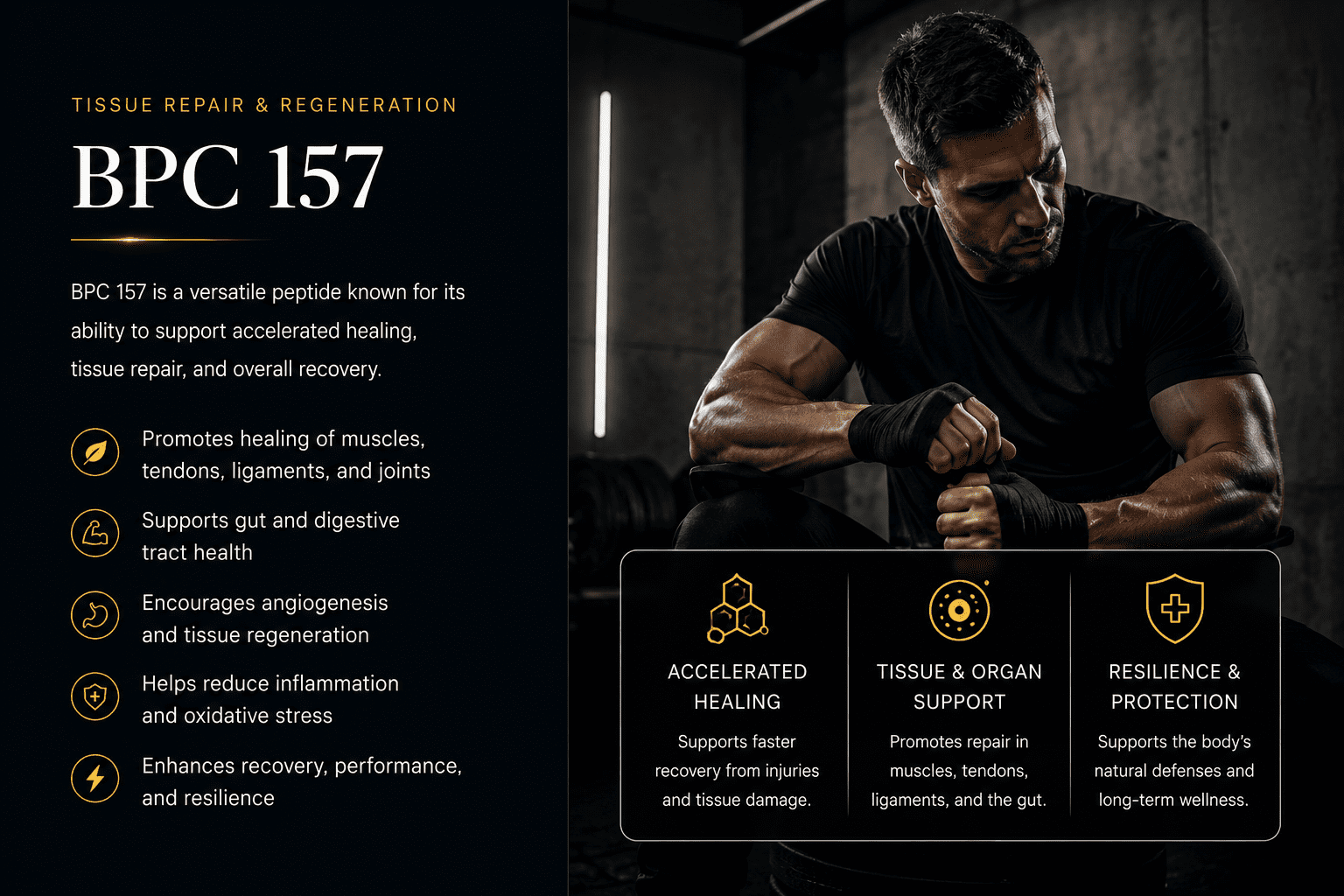
BPC-157 is a 15-amino-acid peptide. Bring your recovery or digestive-health questions to a clinician for an individual assessment.
Bring questions about BPC-157 alongside a clear description of the injury, pain or digestive concern. The starting point is understanding what needs assessment.
Laboratory tendon-cell work and very small human reports cannot establish broad clinical effectiveness. A published two-person infusion pilot is too small to settle safety, long-term effects or whether treatment helps an injury.
Epithalon, also spelled Epitalon, is a peptide discussed during healthy-aging consultations. Your clinician can review the evidence relevant to your goals.
Bring your healthy-aging priorities and epithalon questions to your clinician. Review realistic goals and the options that may fit your health history.
A human-cell experiment investigated telomerase activity and telomere length. Cells in a laboratory are not a clinical trial of longevity, and these findings cannot predict an anti-aging result.
GHK-Cu is a copper-binding peptide discussed in skin and tissue biology. A topical cosmetic formulation, a laboratory experiment and an injectable preparation involve different exposures and evidence.
Discuss GHK-Cu in relation to your skin or scalp concern and the proposed formulation. Topical skincare and injectable products are different approaches.
Cell gene-expression findings describe biological pathways. They do not establish that every copper-peptide product reverses aging, restores hair or has the same safety profile across routes.
MOTS-c is a mitochondria-derived peptide studied in cellular energy and metabolic signaling.
Bring MOTS-c questions to a consultation focused on metabolic and cellular health. Review the available evidence, uncertainties and options that fit your goals.
Foundational metabolic results came from laboratory and mouse experiments. Changes in animal metabolism are not the same as demonstrated weight, energy or longevity benefits from treatment in people.
Semaglutide acts at the GLP-1 receptor, a signaling pathway involved in appetite and glucose regulation. The brand, formulation and reason for treatment determine the care plan.
A GLP-1 medication that may be discussed during a weight-management or metabolic-care evaluation. The specific product and your medical history matter.
Product-specific clinical studies guide use. Results depend on the population studied; a study average is not a prediction for an individual. Different branded and compounded preparations should not be assumed equivalent.
Tirzepatide acts on both GIP and GLP-1 receptors. It belongs in a discussion of appetite, weight history and metabolic health, alongside nutrition and ongoing clinical follow-up.
A medication that acts on GIP and GLP-1 pathways. Discuss how it compares with other prescription approaches for your weight and metabolic goals.
The prescribing information describes the studied populations, benefits, adverse effects and precautions. Review the exact product; results from one formulation do not validate every product sold under a similar name.
Testosterone is an androgen hormone; TRT means testosterone replacement therapy. A treatment decision connects symptoms with reliable repeat measurements and evaluation of the underlying cause.
For men, testosterone therapy starts with symptoms and confirmation of consistently low testosterone using appropriate testing. A consultation also considers other causes of the symptoms.
A clinical guideline supports diagnosis with compatible symptoms and consistently low levels. Discussion should cover fertility and individual risks rather than using a single laboratory number as the whole diagnosis.
HRT is an umbrella term for hormone replacement therapy. In menopause care it may involve estrogen and, when indicated, a progestogen; local and systemic approaches serve different purposes.
Explore a personal plan for perimenopause or menopause concerns such as hot flashes, night sweats or vaginal discomfort. Treatment choices depend on the symptoms and individual history.
Benefits and risks depend on symptoms, age, medical history and treatment route. The label “bioidentical” alone does not establish that a preparation is safer or better suited to an individual.
ACTH is a pituitary hormone that signals the adrenal glands to make cortisol. Testing it can help investigate why cortisol is unusually high or low.
ACTH is considered together with cortisol and the clinical picture. The relationship between the two hormones can help distinguish different causes.
Specialized stimulation or suppression tests may be used to investigate adrenal and pituitary function. Routine symptoms alone do not identify which gland, if any, is affected.
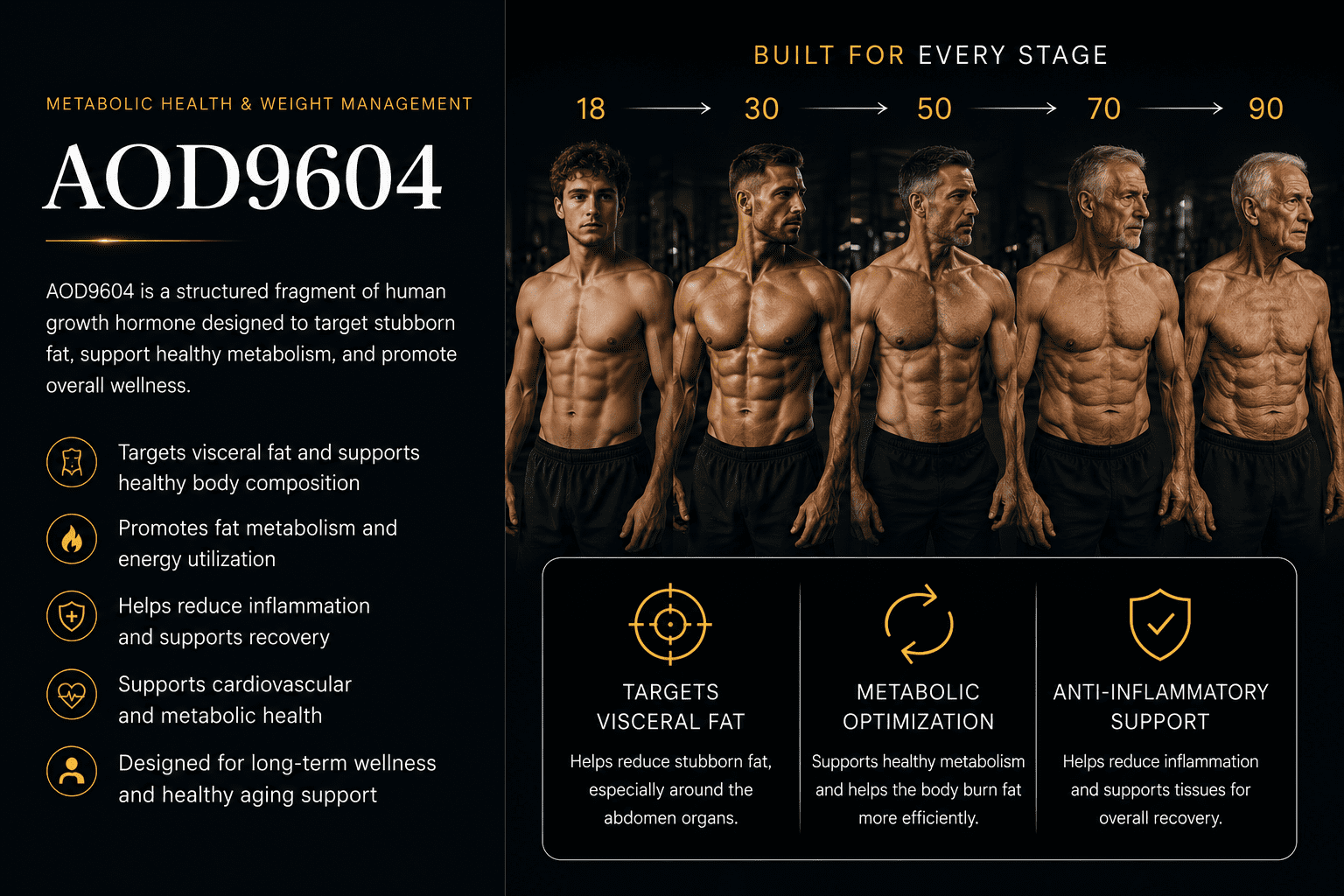
AOD-9604 is a synthetic peptide based on a small part of human growth hormone. It is a different substance from full-length HGH and from GLP-1 medications.
Bring AOD-9604 questions to a body-composition consultation. Ask your provider to explain the available human evidence and how it relates to your particular goals.
Early metabolic experiments included animal models. Those findings do not by themselves establish meaningful weight loss in people or identify an appropriate clinical regimen.
Cagrilintide is a long-acting amylin analogue being evaluated in weight-management clinical trials. Amylin is a different signaling pathway from GLP-1.
CagriSema is the name used in clinical trials combining cagrilintide with semaglutide. The two medicines are not interchangeable.
Evidence from a clinical trial does not establish the quality, safety or availability of an independently marketed product.
CJC-1295 is a growth-hormone-releasing hormone analogue studied for its effects on GH and IGF-1. Names involving DAC and preparations described as without DAC require particular care in identification.
CJC-1295 questions belong in a clinician-led review of the exact product and intended use. Product names and combinations do not establish that two preparations are equivalent.
A healthy-adult trial measured hormone changes after a long-acting preparation. That is not proof of improved strength, injury recovery or longevity, and does not validate differently formulated products.
Cortisol is an adrenal hormone involved in metabolism, stress responses and other body functions. Clinicians may measure it in blood, urine or saliva for specific diagnostic questions.
The test method and collection timing matter. Evaluation of an adrenal disorder is different from assuming everyday stress means a person needs hormone treatment.
An unusual result may require repeat or specialized testing. A single cortisol value does not explain every fatigue, sleep or weight concern.
DHEA and DHEA sulfate are related adrenal androgen hormones. DHEA-S testing can help evaluate adrenal function and certain symptoms of excess androgens.
A DHEA-S laboratory result and a decision to take a DHEA supplement are different questions. Age and the reason for testing affect interpretation.
A value outside a reference range does not by itself establish the cause or show that supplementation would help. A clinician may consider additional tests.
DSIP stands for delta sleep-inducing peptide, also called emideltide. Persistent sleep problems deserve an individual assessment.
Questions about DSIP belong in a broader sleep review. Discuss your sleep schedule, awakenings, snoring, daytime symptoms and substances or medicines that may affect rest.
A small placebo-controlled insomnia study reported weak effects that were partly difficult to distinguish from changes in the placebo group. This does not establish a dependable long-term sleep treatment.
Estradiol is a form of estrogen involved in reproductive function and other body systems. A laboratory estrogen measurement and a decision to prescribe estrogen are different clinical questions.
Estrogen therapy can take different forms. Ask your clinician to compare local and systemic approaches in relation to the menopause symptoms you want to address.
A clinician interprets hormone measurements in the context of life stage and symptoms. In treatment discussions, local versus systemic exposure and uterine history matter.
Follicle-stimulating hormone is made by the pituitary gland and participates in reproductive function. It is often interpreted together with LH and sex-hormone measurements.
FSH testing may help investigate menstrual changes, fertility or other reproductive concerns. Its meaning depends on age, cycle timing and medical history.
One result cannot answer every question about fertility or menopause. A clinician chooses testing based on the concern rather than treating every hormone level as a target.
GHRP-2 is a synthetic growth-hormone-releasing peptide studied for effects on GH secretion and appetite. It is not growth hormone replacement.
Questions about this pathway belong in an endocrine assessment, including why a change in GH signaling is being considered and what outcome matters.
A small human experiment measured increased GH and food intake. A short hormone or appetite response does not establish long-term improvements in body composition or health.
GHRP-6 is another growth-hormone-releasing peptide. The number is part of its identity: GHRP-2 and GHRP-6 are different compounds, not alternative spellings.
Compare the exact molecule, route and clinical question. Evidence about another secretagogue should not be automatically applied to GHRP-6.
Human safety information for proposed use is limited. Questions about hormone signaling and glucose effects deserve individual clinical review.
Human chorionic gonadotropin is a reproductive hormone. Prescription hCG has specific endocrine and fertility uses that require a diagnosis and monitoring.
Questions about hCG may arise during reproductive or testosterone-related care. It differs from directly replacing testosterone and should be discussed in light of fertility goals.
Product information does not establish hCG as an effective weight-loss approach. A fertility or endocrine indication should not be confused with the so-called hCG diet.
Human growth hormone is a pituitary hormone involved in growth and metabolism. Somatropin is manufactured growth hormone; GH-releasing peptides act upstream and are different products.
HGH questions start with an endocrine evaluation. Symptoms, pituitary history and appropriate testing help determine whether growth-hormone deficiency is present.
Adult deficiency is evaluated in a clinical context and often requires stimulation testing. General tiredness and normal age-related changes do not establish that growth-hormone replacement is appropriate.
Insulin-like growth factor 1 is a hormone involved in growth and a useful part of assessing the growth-hormone pathway. It is not the same substance as insulin.
IGF-1 testing can help investigate suspected GH excess or deficiency. Results are interpreted alongside age, symptoms, history and other tests.
A blood measurement is a diagnostic clue, not a standalone instruction to use GH or a peptide. Depending on the situation, stimulation or suppression testing may be needed.
Insulin is a pancreatic hormone that helps glucose enter cells. An insulin blood test can contribute to certain evaluations, but it is different from blood glucose or A1C testing.
Insulin results are interpreted in relation to glucose, symptoms and the reason for testing. Insulin resistance is part of a wider metabolic assessment.
An isolated insulin value is not a complete diagnosis or a reason to choose a specific peptide. Some people need insulin medicine for diabetes; that is a separate treatment decision.
Ipamorelin is a synthetic peptide studied as a growth-hormone secretagogue: a substance that encourages GH release. It is different from directly supplying growth hormone.
Ask about ipamorelin separately from other growth-hormone pathway products, even when a combination is being discussed. Evidence for one route or formulation may not apply to another.
Original pharmacology studies investigated hormone release. A biological signal does not establish a meaningful wellness outcome, and evidence for an individual compound does not establish the safety of a combination.
KPV refers to the three amino acids lysine, proline and valine. This peptide has been investigated in cell and animal models of intestinal inflammation.
Explore KPV questions in relation to a clearly defined concern, such as a question about inflammatory or digestive health. A clinician should assess symptoms before considering a product.
Laboratory intestinal models do not establish a treatment for a person’s digestive disease. Persistent symptoms need an appropriate medical diagnosis.
Luteinizing hormone is a pituitary hormone that works with FSH in reproductive function. It helps coordinate ovarian activity and stimulates testosterone production in the testes.
An LH test may be part of investigating fertility, menstrual patterns or low testosterone. The accompanying hormone levels help a clinician interpret the result.
LH changes across reproductive stages and is affected by clinical circumstances. An isolated result should not be used to self-select TRT, HRT or a fertility medicine.
Liraglutide is a GLP-1 receptor medication with a daily administration routine. It is one of several prescription approaches that a clinician may compare for weight-management goals.
Another GLP-1 medication to discuss when comparing prescription weight-management approaches. Your clinician can explain how the daily routine and treatment plan differ from other options.
The decision involves the specific product, individual medical history and ability to continue follow-up. A medication comparison should cover daily routine and tolerability as well as expected benefit.
Melatonin is a hormone associated with darkness and the timing of the sleep-wake cycle. A sleep-timing problem is different from every other cause of insomnia.
Supplements may help with certain timing-related problems, such as jet lag. The right discussion starts with sleep schedule, light exposure, awakenings and daytime symptoms.
Long-term supplement safety is less clear, and evidence is not strong enough to recommend melatonin as a general treatment for chronic insomnia. Product contents may vary.
Progesterone is a reproductive hormone with roles in the menstrual cycle and pregnancy. Natural progesterone and the broader group of progestogens are related terms, but not every product is identical.
Progesterone may be part of a hormone plan. One important discussion is protection of the uterine lining when systemic estrogen is used in someone who has a uterus.
A blood level has meaning only in context, including cycle timing and the reason for testing. Ask your clinician to distinguish diagnostic testing from the specific role of progesterone in a hormone plan.
Prolactin is a pituitary hormone best known for its role in milk production. Testing can also be relevant to certain menstrual, fertility or sexual-function concerns.
Higher levels can occur for different reasons, including some medicines and pituitary conditions. A result needs interpretation in the context of symptoms and health history.
A high value does not by itself diagnose a pituitary tumor. Your clinician may repeat the test or request other evaluation to clarify the cause.
PT-141 is another name for bremelanotide, a melanocortin receptor agonist. It is distinct from testosterone replacement and from medicines that target erectile function.
Bring questions about PT-141 to a confidential assessment of changes in sexual desire. Medical history, medicines, relationship context and the cause of the concern shape the consultation.
Product-specific studies and prescribing information define the clinical context. Blood-pressure effects, nausea and other precautions need review; a sexual-wellness concern is not by itself a reason to choose this medicine.
Retatrutide targets GIP, GLP-1 and glucagon receptors and is being evaluated in metabolic and weight-management clinical trials.
It differs from semaglutide and tirzepatide in the pathways it targets. This entry describes clinical trials and does not offer retatrutide treatment.
The developer reported additional phase 3 findings in July 2026. Study results apply to the trial population and preparation; an online product with the same name is not validated by those results.
Selank is a synthetic peptide analogue of tuftsin. Your consultation starts with your symptoms and the care you already receive.
Explore Selank questions during an individual consultation about stress, emotional well-being and everyday functioning. Your history helps identify the most useful next step.
Gene-expression and animal findings help explore mechanisms. They cannot substitute for robust clinical evidence about a specific mental-health concern, product or route.
Semax is a synthetic peptide related to an ACTH fragment, investigated in neuroscience. Its name may appear in discussions of cognition, but it is different from measuring or replacing ACTH.
Bring Semax questions to an assessment of focus, concentration or brain-fog concerns. Describe the pattern and how sleep, stress or medication changes may relate.
Laboratory findings about neurotransmitters do not establish a reliable improvement in everyday focus, or equivalence between formulations and routes.
Sermorelin belongs to the growth-hormone-releasing hormone pathway. The consultation question is whether there is an endocrine problem to investigate, and how this differs from HGH replacement.
Discuss sermorelin within a review of growth-hormone pathways and your specific concern. Ask how the proposed approach differs from replacing growth hormone directly.
Ask for evidence about the exact proposed preparation and clinical objective. A growth-hormone deficiency guideline does not endorse every GH-pathway product or general anti-aging use.
T3, or triiodothyronine, is a thyroid hormone. Liothyronine is a manufactured T3 medicine, distinct from levothyroxine, which supplies T4.
Discuss the specific thyroid diagnosis and the reason to consider this medicine. The goal is appropriate replacement for a clinical need, not simply increasing energy.
The prescribing information warns against use for obesity or weight loss. Excess thyroid hormone can cause serious harm, so treatment requires individual medical supervision.
T4, or thyroxine, is a thyroid hormone. Levothyroxine is manufactured T4 used to replace missing thyroid hormone in appropriate clinical situations.
An underactive thyroid can affect energy and other body functions. Similar symptoms have other causes, so diagnosis relies on history and laboratory evaluation.
Thyroid replacement is adjusted using clinical follow-up and thyroid tests. It is not a general weight-management or energy supplement.
TB-500 is a name used for a thymosin beta-4 fragment in peptide discussions. Clarify the exact sequence and preparation: findings about full-length thymosin beta-4 do not automatically apply to a fragment.
Explore TB-500 questions in the context of a specific recovery concern. Ask your clinician to clarify the compound and how information about related substances differs.
Evidence about related compounds or laboratory repair processes cannot be treated as proof that a particular TB-500 product improves a human injury.
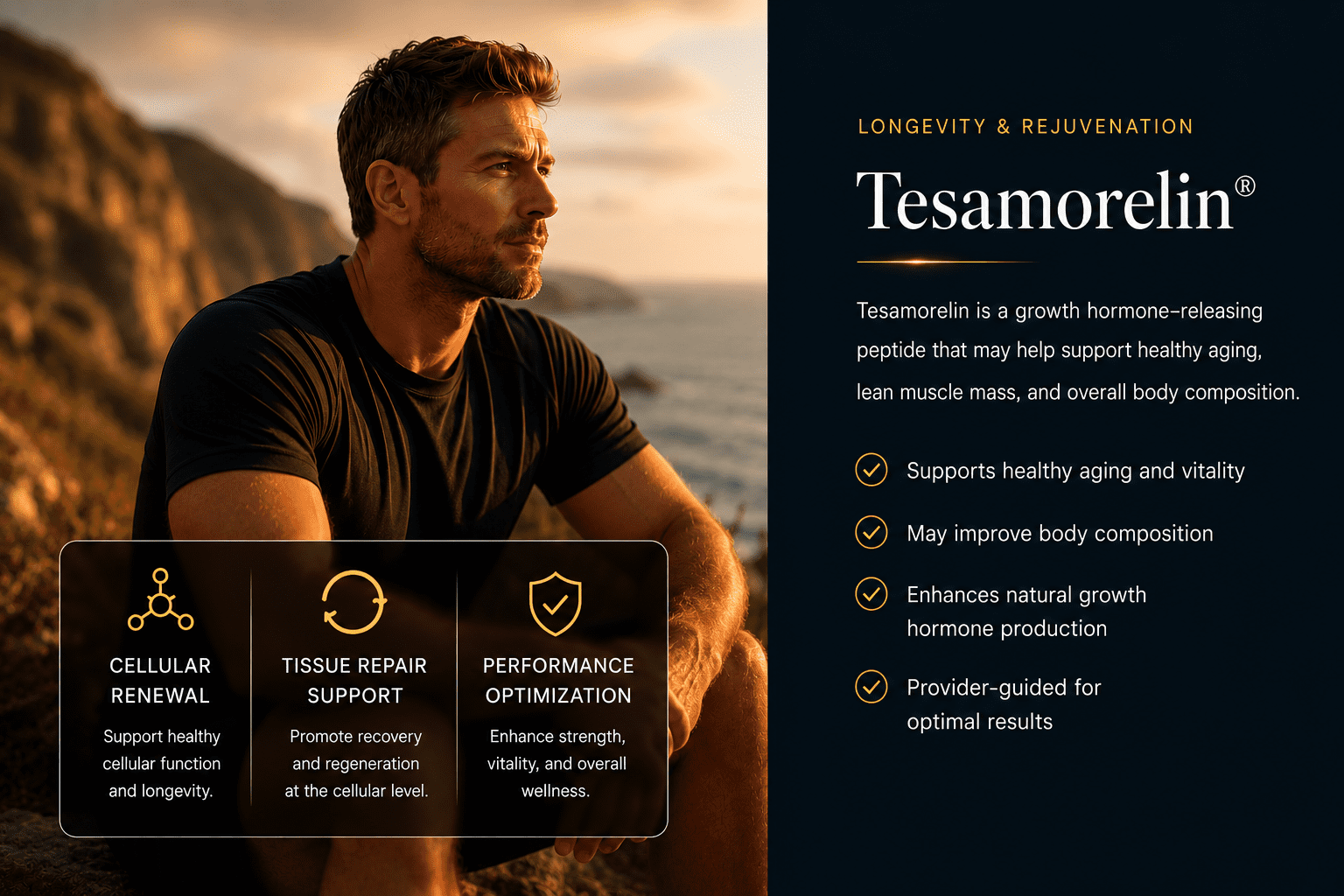
Tesamorelin is a growth-hormone-releasing factor analogue. Its clinical discussion is specific to a person’s health history and the intended use, rather than a general promise of weight loss.
Explore tesamorelin through an individual medical evaluation. Your clinician connects the specific treatment question with your health history, goals and other care options.
Review the product-specific prescribing information with your clinician. Relevant issues include GH/IGF-1 signaling, glucose, contraindications and the monitoring required for the clinical situation.
Thymosin alpha-1 is a peptide studied in immune responses. It is distinct from thymosin beta-4, TB-500 and thymulin despite their similar names.
Bring questions about thymosin alpha-1 to a medical review of the particular immune-health concern. Recurrent illness or unexplained symptoms deserve assessment of their cause.
Clinical results depend on the disease and study. A large randomized sepsis trial found no clear reduction in 28-day mortality; those findings do not establish a general immune benefit for healthy people.
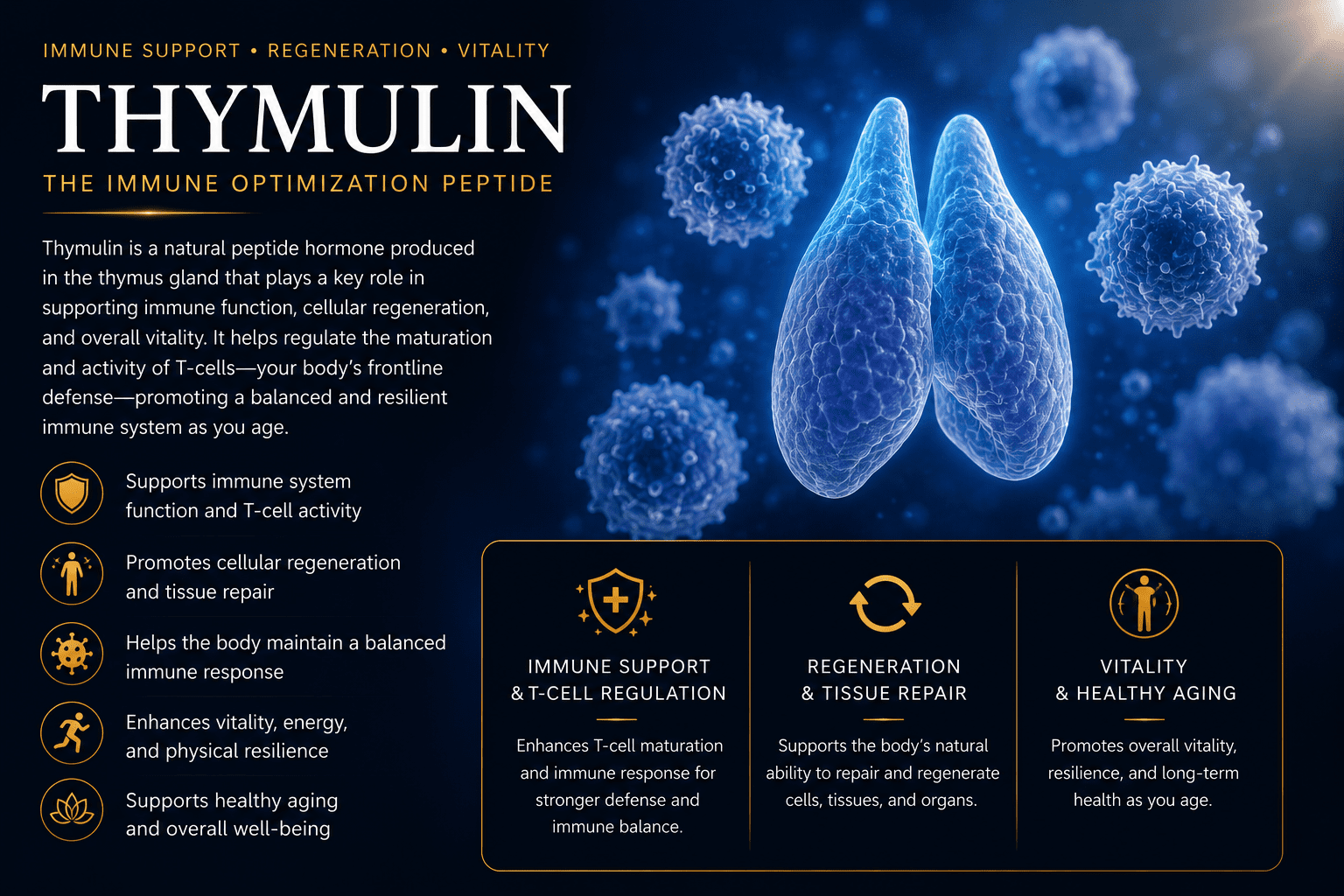
Thymulin is a small thymus-derived peptide whose biological activity depends on zinc. It is distinct from thymosin alpha-1 and the thymosin beta family.
Bring thymulin questions to an immune or endocrine-health consultation. Similar names can obscure important differences, so identify the exact compound and review the available evidence.
Laboratory zinc-binding studies establish aspects of its biology. They do not establish a routine clinical treatment or a predictable benefit for a general wellness goal.
Thyroid-stimulating hormone is a pituitary signal that tells the thyroid to produce thyroid hormones. TSH is commonly measured in a blood test.
TSH is interpreted with symptoms and, when relevant, T4 or other thyroid tests. A high or low result can point toward a thyroid problem but needs clinical context.
Laboratory ranges and individual circumstances matter. Medications, illness and other factors can affect interpretation; an isolated number should not determine a treatment plan.
Try a shorter name or abbreviation, or select another category. This reference covers the topics listed here; it does not guess at an unknown compound.
Bring your question to a consultation ↗Use this guide to prepare for your consultation. Your clinician reviews your health history, goals and the care options that may be appropriate for you.
Reference updated September 9, 2026
Medical Director: Daniel Olivero, MD
800 SE Walton Blvd, Suite 12, Bentonville, AR
LaserTouch MD is recognized among Arkansas’s Top 10 Medical Spas by the American Aesthetic Board.
View the Arkansas Top 10 recognition.
Discover medically supervised peptide therapy in Bentonville and Northwest Arkansas, with personalized care serving Rogers, Bella Vista, Springdale, Fayetteville, and surrounding communities.
Visiting from Rogers, Fayetteville or Springdale? View local appointment information.








You bring the goals. We help you understand the next step.

FROM CURIOSITY TO FOLLOW-UP
Tap each stage to explore what comes next.
Choose the goals you want to discuss. Open a photo card or use the guide to create a short list of consultation topics. You can change your choices at any time.
Share your history with a qualified clinician through the appropriate intake process. Discuss whether an examination, testing or another type of care should come first.
Review the options, evidence, risks, alternatives and costs together. Your clinician determines whether treatment is appropriate; a guide result never guarantees a prescription.
Clarify aftercare, follow-up and who to contact with questions. Revisit the plan when your health, experience or priorities change.
GOOD QUESTIONS. CLEARER EXPECTATIONS.
Explore how medical supervision, patient-specific prescriptions, pharmacy sourcing and follow-up fit into your care. These questions can help you prepare for a personal consultation.
Start with the concern you want to discuss, rather than a specific compound. You might be looking for help understanding weight-management options, changes in energy, a skin or scalp concern, or a question about sexual wellness. Use the guide to organize those topics. At your consultation, explain what has changed, how long it has been happening and what you hope to learn. Your clinician can then decide whether a peptide-related discussion, a different treatment, further assessment or no treatment is the appropriate next step.
Prepare a current list of prescription medicines, over-the-counter products and supplements, along with any allergies and previous treatment reactions. Bring relevant laboratory reports if you already have them; do not assume a test needs to be repeated simply because you are starting a new consultation. Make a note of your goals, your questions and any practical limits such as travel, budget or scheduling. Share detailed medical information through the clinic’s appropriate intake process, rather than entering it into this public educational guide.
The guide connects selected goals and common words with educational topics. It does not examine you, review your records, interpret laboratory results or establish that a treatment is safe for you. A match means a subject may be useful to discuss, not that you have a condition or need a prescription. If the guide does not recognize your concern, you can choose a broader topic or contact the team. New, worsening or severe symptoms need appropriate medical assessment rather than further searching for a peptide.
You can begin with everyday language. Select a goal card, describe what you would like to discuss in a short phrase and look at the related topics. Open the photo cards to read more about care considerations and questions to bring. You are not expected to arrive with a treatment selected. If your goals are primarily aesthetic, our interactive Aesthetics 365™ plan offers another way to explore skin, scalp and facial-care consultations. Both guides can help you prepare for a more personal consultation.
Our peptide care is medically directed and patient-specific. Your consultation brings together your goals, health history, current medicines and any testing your provider recommends. When treatment is appropriate, your prescriber develops an individual plan, coordinates prescription fulfillment through licensed pharmacies and explains follow-up. You receive guidance for the medication actually prescribed to you, including how to raise questions or report concerns. The guide helps you prepare for that consultation; prescribing decisions are made by your treating clinician.
Section 503A generally covers qualifying compounding for identified patients with individual prescriptions, including preparation by licensed pharmacies. Section 503B covers FDA-registered outsourcing facilities under a different set of requirements. These terms describe compounding frameworks; they do not mean every ingredient or use qualifies. Our care is patient-specific and medically supervised. Ask the care team which pharmacy or facility supplies your prescribed medication and how to contact it with product questions.
For questions about a compounded prescription, discuss the formulation and the reason it is being considered with your prescriber. Your prescriber should explain the specific formulation, the reason for considering it, what is known about the treatment, potential risks and alternatives. Medical supervision and pharmacy sourcing are part of the care process; product-specific information remains essential to an informed decision.
A personalized peptide plan begins with your clinician’s assessment and identifies the concern being addressed, the reason for considering each option and how the decision fits your health history. Ask what would count as progress and what would lead your clinician to pause, change or stop treatment. The plan should also make practical sense: how follow-up happens, who answers questions, what the expected costs include and how to report a concern. Personalization can also mean deciding that a different kind of care is more appropriate than peptide therapy.
Testing is a decision for your provider, not a fixed shopping list. Ask which question each proposed test is intended to answer, how its result might affect your care and whether any recent results can be reviewed. Your clinician may request testing, an examination or information from another treating professional before deciding what comes next. For local arrangements, explore in-house lab draws at LaserTouch MD. Confirm any preparation instructions directly with the care team; this guide does not provide fasting instructions or interpret results.
A weight-management consultation can cover health history, appetite, nutrition, activity, previous attempts and medicines that may affect the plan. The metabolic card above introduces semaglutide and tirzepatide and explains why prescription eligibility requires a clinician. It also distinguishes those discussions from compounds promoted online for general fat loss. Visit our GLP-1 weight-management page for the clinic’s service information. Ask which specific product is being considered, what evidence supports it for your situation and what ongoing monitoring would involve.
Bring the full picture to one coordinated personal consultation. A provider needs to know what you are already taking or using before discussing additions, including products ordered elsewhere. Ask how the proposed care fits with any hormone treatment, weight-management medicine or supplement routine. More products do not automatically make a better plan. This guide does not suggest combinations, schedules or doses. Your clinician can explain whether a proposed combination is appropriate, whether another prescriber should be involved and what changes need to be communicated between visits.
Look for the exact compound, formulation and purpose being discussed. Ask which specific prescription product, compounded formulation or topical preparation the information describes, and whether its evidence applies to the intended use. A photograph, testimonial or general explanation of cell signaling does not establish that a treatment will work for your concern. In your consultation, ask the clinician to explain the evidence in terms you understand, including what remains uncertain.
Use follow-up to review your experience, questions, any unwanted effects and whether the original goal still makes sense. Ask who to contact if a concern arises before the next appointment and which issues should be assessed elsewhere or urgently. If laboratory monitoring or another evaluation is part of your plan, clarify its purpose and timing with the prescriber. Keep a simple record of the questions you want answered. Follow-up should support an informed decision about continuing, adjusting or stopping care rather than an automatic renewal.
Ask for the details of the option actually being proposed for you: the consultation, any testing, medication or other treatment, supplies when relevant, follow-up and possible ongoing costs. Confirm what is included before making a decision. Product availability, individual suitability and prescribing arrangements can vary, so a general website description cannot promise access to a particular prescription. Contact the LaserTouch MD team for current service and appointment details. You can also explore skincare and supplement shopping separately from prescription-care decisions.
LaserTouch MD’s flagship is at 800 SE Walton Blvd, Suite 12, Bentonville, AR 72712. Patients exploring peptide therapy near Rogers, Fayetteville, Springdale or Bella Vista can use this guide to prepare questions before contacting our Bentonville team.
When planning an in-person visit, tell the team what you would like to discuss and ask which appointment is the right starting point. If you have relevant records or test results, ask how to share them through the appropriate intake process. Confirm any visit preparation directly with the team.
If you are comparing nearby peptide clinics, look beyond a list of compound names. Ask how medical assessment works, who makes prescribing decisions, how follow-up is arranged and what the proposed care is intended to address. Clear answers help you compare the actual care experience.
For patients considering care from home, explore our medically supervised virtual peptide consultations. The appropriate appointment format depends on care needs, provider availability and applicable requirements.
Educational content from LaserTouch MD. Personal recommendations come from your treating professional. Explore more patient education in The Precision Journal.
Connect with our team, explore your options, and take the next step with LaserTouch MD.