
Bring These Seven Questions to Your Lab Review
The Precision Journal · Lab draws & testing
Bring These Seven Questions to Your Lab Review
A lab report is most useful when it starts a focused conversation. Use this short guide to understand why a test was ordered, what can affect it and what happens next.
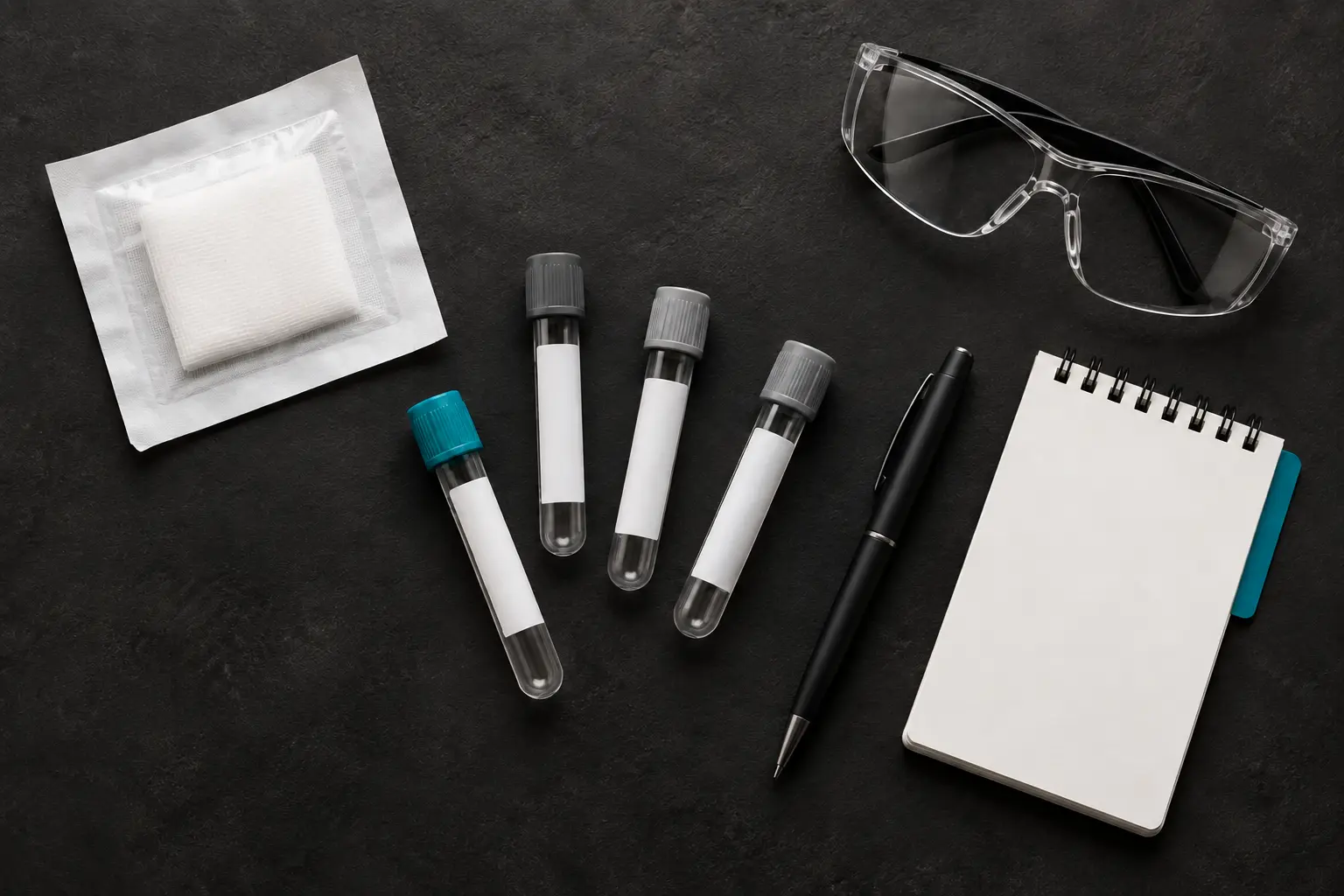
Begin with the reason, not the flag
A portal may highlight a number before you have spoken with your provider. Resist the urge to treat one high or low flag as a diagnosis. The National Library of Medicine explains that laboratory results are interpreted with your history, symptoms, examination and other information. A result outside a reference range may or may not signal a health problem, and a result inside the range does not automatically rule one out. [1]
Your review becomes clearer when you know what question the test was meant to help answer. Bring the report if you have it, plus a short list of medicines, vitamins and supplements. Then work through the questions below.
Your seven-question review
- What was this test intended to evaluate?
Ask whether the goal was screening, establishing a baseline, monitoring a known issue or checking how a plan is working. That purpose changes how an individual number should be discussed. - Which findings matter most for me—and why?
Instead of walking through every value with equal weight, ask which results deserve attention in the context of your goals, history and symptoms. - Should we look at a trend rather than one result?
A prior value can add context, but use care when comparing reports from different laboratories. Methods, units and reference ranges can differ. Ask whether the comparison is truly like-for-like. [1] - Could preparation have affected anything?
Mention whether you fasted as instructed, the time of the draw, recent strenuous exercise and any illness. Also disclose prescription and over-the-counter medicines, vitamins and supplements. Do not stop a medicine unless your provider tells you to. [2] - What does this reference range mean for this specific test?
Use the range printed by the laboratory that processed your sample—not a range copied from another report or found online. Ask how age, sex, method or other relevant factors are considered. - Do we need to repeat, confirm or add a test?
If follow-up is recommended, ask what it is meant to clarify, whether preparation will be different and when it should happen. - What is the next step, and when should I check back?
Leave with a concrete plan: what you will do, what the clinic will do, when you should expect an update and which symptoms or changes should prompt earlier contact.
A five-minute preparation note
Before your review, write down four things: the date and location of the draw; whether you followed the preparation instructions; your current medicines and supplements; and the two questions you most want answered. If you did not follow an instruction exactly, say so. That information may help the provider decide whether a result needs confirmation. [2]
Avoid changing medication, starting a supplement or repeating a test on your own based only on a portal flag. A useful review connects the number to its purpose and to your individual care.
How lab draws fit into care at LaserTouch MD
LaserTouch MD’s current lab service page describes the Bentonville office as a collection and care-coordination location. When testing is medically appropriate, specimen collection may be provided or coordinated there; samples may be processed by an outside laboratory. Available tests, ordering requirements, turnaround times and insurance or self-pay arrangements can vary.
That makes one question especially practical before the draw: “What preparation, order and follow-up process applies to this test?” The answer should come from the instructions for your specific order, not from a generic fasting rule.
Bring your questions to the appointment
Patients in Bentonville, Rogers and nearby Northwest Arkansas communities can learn more about in-house lab draws and wellness testing at LaserTouch MD. Testing is not a substitute for emergency care or a complete evaluation by your primary-care clinician.
Request a lab or wellness appointment
Need help choosing the right visit? Call 479-268-4573.