
How Follow-Up Shapes a Hormone-Care Plan
Precision Journal · Hormone care
How Follow-Up Shapes a Hormone-Care Plan
A prescription is one point in time. Follow-up is where symptoms, tolerance, measurements and the exact product come together to guide what happens next.
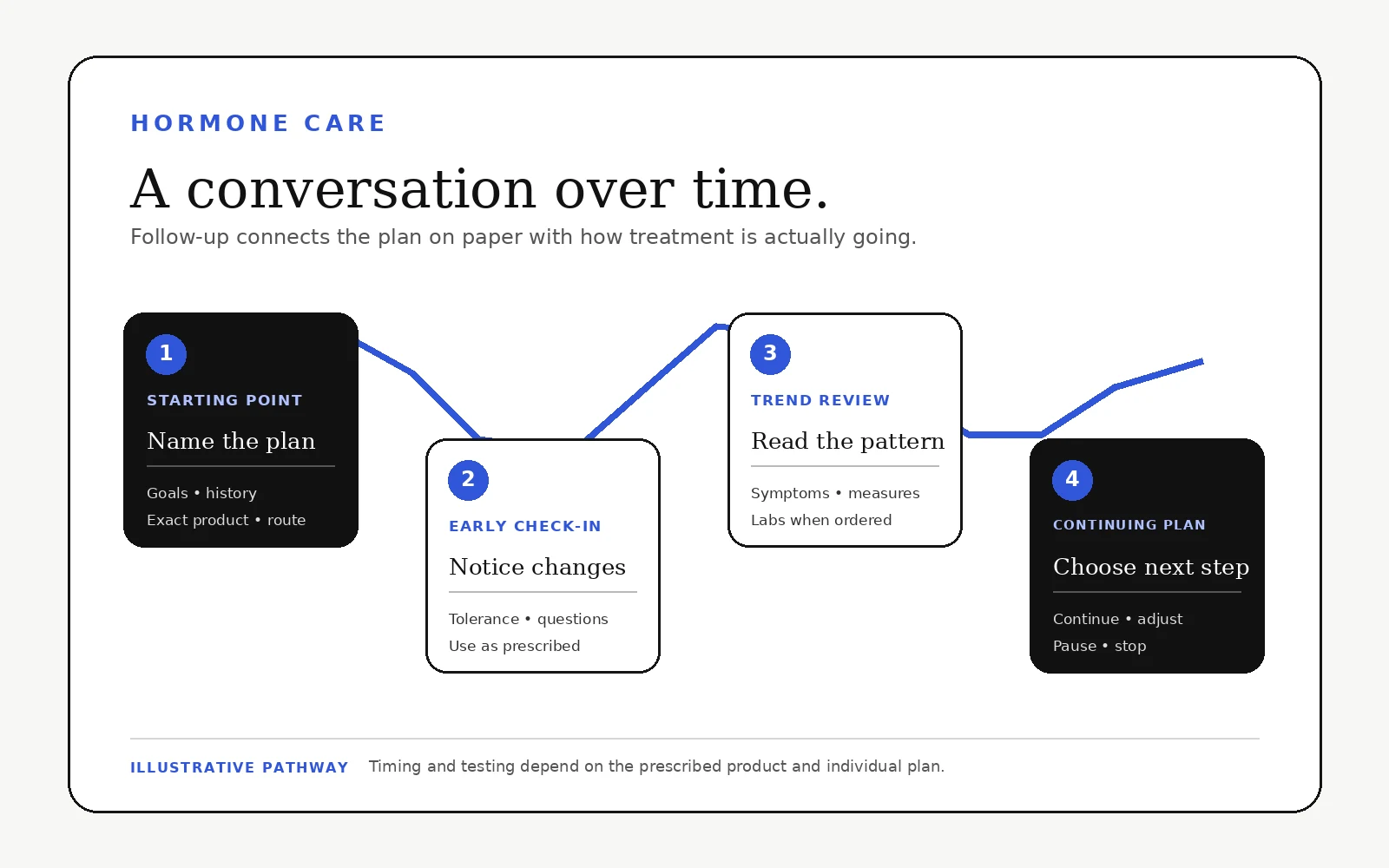
Hormone care is rarely a “set it and forget it” decision. The useful question after treatment begins is not simply whether you feel different. It is whether the plan is meeting its original goal, whether any changes are safe and tolerable, and whether the evidence supports continuing it. That takes a series of conversations rather than one isolated appointment.
Record the goal, relevant history, exact product and route.
Discuss tolerance, questions and how the medicine is being used.
Compare symptoms, measurements and any ordered laboratory work.
Continue, adjust, pause or stop with the prescribing clinician.
1. Return to the reason treatment started
A useful follow-up begins with the goal documented at the first visit. For testosterone therapy, that means confirming the clinical picture included symptoms and consistently low testosterone levels—not treating a single number by itself. For menopausal hormone therapy, the goal may involve hot flashes, sleep or genitourinary symptoms, but the product, route and personal history still shape the discussion.
Bring the exact name, strength and route of every hormone product, along with medicines and supplements. Men should also keep fertility goals in the conversation. Women should report their bleeding pattern and whether they have a uterus, because those details can change the plan.
2. Describe what has changed, including what has not
Follow-up is the place to describe benefits, unwanted effects and practical problems without editing the story. When did a change begin? Is it steady or occasional? Were there missed doses, application difficulties or a change in another medicine? Those details help separate a true treatment response from normal day-to-day variation.
A lack of benefit is useful information too. It may lead to more evaluation, a revised goal or a decision that the treatment is not the right fit. Change a dose or schedule only with the prescriber; self-adjustment can make the next set of symptoms or test results harder to interpret.
3. Match monitoring to the exact product
There is no single follow-up checklist for every form of HRT or TRT. Testosterone monitoring may include symptoms, blood pressure, testosterone concentration, a blood count or hematocrit, fertility considerations, and prostate or urinary symptoms when appropriate. Menopausal hormone therapy follow-up may include symptom response, bleeding, adverse effects, blood pressure and recommended preventive screening. Systemic and local products, oral and transdermal routes, and regimens with or without a progestogen are not interchangeable.
4. Make the next decision explicit
End the visit with a clear next step: continue the plan, adjust it, pause it, stop it or investigate something else. Ask what should be tracked at home, which tests are needed, and when the next review should occur. The answer should reflect the product and your health history rather than a universal calendar.
Contact the prescribing team promptly about unexpected vaginal bleeding, a new breast symptom, or worsening urinary or prostate symptoms. Seek emergency care for chest pain, sudden shortness of breath, one-sided leg swelling, or stroke-like symptoms such as facial droop, arm weakness or trouble speaking.
Plan your next conversation
LaserTouch MD offers women’s HRT and men’s TRT consultations for Bentonville, Rogers and surrounding Northwest Arkansas communities. Bring your goals, medication list and questions so the visit can focus on your individual plan.
LaserTouch MD hormone services — lasertouchmd.com
FDA Testosterone Information — fda.gov/drugs/testosterone-information
FDA menopausal hormone-therapy labeling update — fda.gov
Endocrine Society statement on testosterone diagnosis and monitoring — endocrine.org